
Best Shoulder Rest & Chin Rest for Violin or Viola: Why Ergonomic Setup Matters
Why Your Violin Setup Can Make or Break Your Playing Career
Any activity performed repeatedly places cumulative stress on the body — and this stress, left unaddressed, can escalate into serious musculoskeletal issues that make the activity painful, or worse, impossible to continue. Violin and viola playing are no exception.
"Sit up straight," your parents used to say — and as with most parental wisdom, they weren't wrong.
Ergonomics — the science of engineering our environment to suit the natural mechanics of the human body — has been extensively studied, particularly in workplace contexts. When applied to string instrument playing, the principle is straightforward: if we can play without forcing our arms into unnatural angles, or compelling our joints to move in ways they were never designed to move, we can perform without excess strain.
But misalignment is insidious. The pain it causes can quietly accumulate for months — even years — before it surfaces. And once it manifests, it can be extraordinarily difficult to reverse.
Prevention is the cure. Investing the time, and sometimes the money, in a properly ergonomic violin or viola setup is one of the most important decisions a player can make.
The Performance Benefits of a Proper Violin Ergonomic Setup
Beyond injury prevention, an ergonomically sound setup directly elevates musical performance. When the instrument sits comfortably — almost like a prosthetic extension of your own body — the dividends are immediate:
Effortless shifting up the fingerboard becomes possible without fear of dropping the instrument.
Smooth string transitions are executed without tension radiating through the neck or shoulders.
Reduced physical tension across the hands, arms, shoulders, and chin translates directly into cleaner, more expressive playing.
Reducing tension is a constant goal in violin technique. Playing with physical ease makes everything — literally — easier. And if you're comfortable, you'll not only feel better, you'll sound better too.

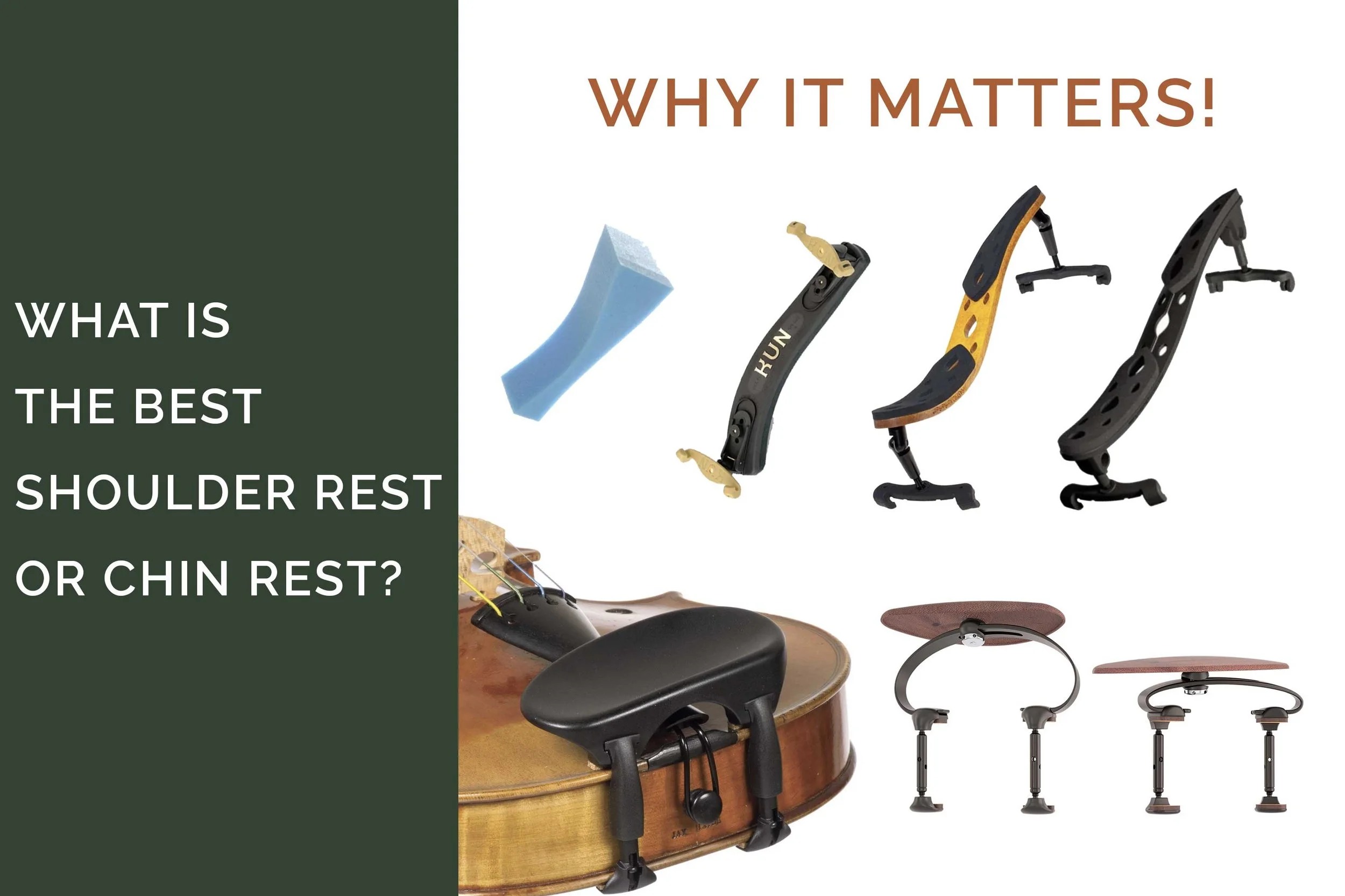
A perfect shoulder rest to get started on. Invented by Michael Kimber, violist, the poly pad offers three dimensional cut for added comfort. Available in fives sizes and even comes with pre-tied rubber bands for easy attachment.

The ultimate in sound and comfort
Instantly comfortable and featherlight
Simple click-system for easy and secure size adjustment
Outstanding freedom and integrity of sound

The ultimate in sound and comfort
PIRASTRO KorfkerRest® – Features and advantages
The world’s lightest shoulder rest (violin model 32 grams, viola model 40 grams)
First shoulder rest using bendable tone wood adjustable to the shape of the shoulder
Offers extensive and very precise personal modifications of position, height and tilt
Brings out a much wider dynamic range from the instrument
Allows a richer diversity in articulation
Finer variations in string contact can be felt
Minimal use of rubber improves sound characteristics
Designed to complement the timeless beauty of the violin
Understanding How Shoulder Rests and Chin Rests Work Together
The chinrest and shoulder rest function as a complementary system. Together, they create the ergonomic fit that allows the violin or viola to feel like a natural part of your body rather than an awkward object being balanced against your jaw.
The shoulder rest is typically the easiest place to begin when optimizing your setup. The ultimate goal: to reduce tension everywhere — hands, arms, shoulders, chin — so that physical ease becomes the foundation of your technique.
The ultimate in sound and comfort
PIRASTRO KorfkerRest® – Features and advantages
The world’s lightest shoulder rest (violin model 32 grams, viola model 40 grams)
First shoulder rest using bendable tone wood adjustable to the shape of the shoulder
Offers extensive and very precise personal modifications of position, height and tilt
Brings out a much wider dynamic range from the instrument
Allows a richer diversity in articulation
Finer variations in string contact can be felt
Minimal use of rubber improves sound characteristics
Designed to complement the timeless beauty of the violin

Comfort & Durability for Students & Professionals
Description: Discover the Everest 3/4 Violin Shoulder Rest, loved by teachers, students, and professionals. This innovative shoulder rest promotes proper playing posture with its unique one-piece design and adjustable legs.
Experience unparalleled comfort with extra-thick neoprene foam and enjoy long-lasting durability. Shop now!
Weight: 0.2 lbs
For years, the market was split between expensive premium rests and basic foam "poly pads" that lacked stability. At Vermont Violins, we initially viewed the Everest as a simple alternative, but years of hands-on use with our students have proven it to be the "sweet spot" of shoulder rest design. It offers the ergonomic support of a high-end rest at a fraction of the cost.
Key Features for Stability & Personalization:
Superior Padding: Features a significantly thicker neoprene foam pad than standard rests, providing immediate comfort for long practice sessions.
Fixed-Tilt Ergonomics: The one-piece body is engineered to promote proper posture, making it a favorite for teachers who want to ensure students develop a healthy "hold" from day one.
Why Teachers Recommend Everest:
The Everest provides a more stable, "locked-in" feel for beginners and intermediate players. It is the ideal upgrade for anyone moving away from foam pads who isn't yet ready for the investment of a professional-tier rest.

The Kun Collapsible fits 4/4 violins and, when adjusted to its smallest size, will also accomodate a 3/4 size instrument. Feet collapse for easy storage. This design is nearly identical to the Kun Original except for the underside material being brown in color instead of black. Very handy for those with shaped cases or those with insufficient space to store the standard Kun shoulder rests.
The Shoulder Rest That Set the Standard
The Kun shoulder rest is not simply a popular accessory — it is the reference point against which virtually every other shoulder rest on the market is measured. Developed decades ago by the Kun family, a celebrated Canadian instrument-making dynasty, it was designed from the outset to address the genuine ergonomic challenges that violinists encounter: neck strain, inconsistent instrument positioning, poor fit across different body types, and the fatigue that accumulates when a player cannot find a secure, natural hold. Vermont Violins has carried the Kun for as long as we have been in business, and it remains the rest we recommend most frequently — for good reason.
A Design That Has Earned Its Reputation
The Kun Sr. Collapsible is engineered around the reality that no two players share the same anatomy. Its wide range of adjustability — achieved by screwing the legs in and out to alter both height and spread — allows the rest to be customized to a degree that most competitors simply do not offer at this price point. The contoured padding sits comfortably over the shoulder and collarbone, distributing the instrument's weight naturally and reducing the tension that accumulates during long practice sessions or performances.
What truly distinguishes the Kun from the field, however, is its pivot system. The legs do not simply extend and retract — they swivel. This means that whether you prefer to project the instrument upward with a raised bell or favor a more relaxed, angled playing position, the rest accommodates that preference without compromise. The feet articulate to follow the lower bout of the violin across multiple orientations, allowing players to tilt and angle the instrument to match their playing style precisely.
An earlier criticism of the Kun — that its original rubber-tubing feet had a tendency to slip from the instrument's edge — has been fully resolved. The current foot design features a contoured, high-grip profile that seats firmly against the violin's ribs and is genuinely difficult to dislodge, even during aggressive playing or shifting.
The Collapsible Advantage
The collapsible leg mechanism is, in our view, the decisive reason to choose this model over the non-collapsible version. When the legs fold flat, the Kun Sr. tucks neatly into the accessory pockets of the vast majority of violin cases on the market — including shaped, contour-fit cases where standard shoulder rests simply will not fit. It is worth noting that because the Kun is the dominant shoulder rest in the market, most case manufacturers design their interior shoulder rest strapping and storage pockets with the Kun's dimensions specifically in mind. The fit, in most cases, is essentially perfect.
Fit Range and Sizing
The Kun Sr. Collapsible is sized for 4/4 full-size violins and, when adjusted to its minimum extension, will also accommodate a 3/4 instrument. For players with an exceptionally long neck who require additional height clearance, Kun offers extended replacement legs — a practical solution that eliminates the need to purchase an entirely different rest. For younger players on smaller instruments, the Kun Jr. Collapsible (1/2–3/4) and the Kun Mini (1/8–1/4) carry forward the same design principles in the appropriate proportions.
Sustainability and Longevity
The Kun is built to last. Most of our customers use theirs for many years without replacement. Should any component wear over time — the feet, the legs, the padding — all are individually replaceable. This modular design means you purchase the rest once and maintain it as needed, rather than discarding and replacing the whole unit. It is a small but meaningful commitment to sustainability that we appreciate, and it aligns with Vermont Violins' broader environmental values.
Vermont Violins' Assessment
We have fitted an enormous number of players with shoulder rests over the years, across every body type, age, and playing level. The Kun Sr. Collapsible consistently serves the widest range of players better than any other rest in its price category. It is not the only rest we carry, and for players with specific anatomical requirements — unusually narrow or wide shoulders, particularly pronounced collarbones — a more specialized option may serve better. But as a first rest, a reliable workhorse rest, or the standard against which to compare alternatives, the Kun Sr. Collapsible is the benchmark.
Choosing the Best Violin Shoulder Rest: Options from Basic to Professional
Shoulder rests and chinrests come in a wide variety of sizes, shapes, and price points — and this diversity exists for good reason. No two bodies are identical. Some players' physiques make a shoulder rest entirely unnecessary; others could not play a single note without one.
Entry-Level Shoulder Rests
Simpler, more affordable shoulder rests are generally contoured to fit a generalized body shape but offer limited adjustability. Foam shoulder rests — such as the Polypad style with rubber band attachments — are an excellent starting point for beginners when the violin is still a fairly alien concept for the body to adapt to.
However, players tend to technically outgrow these quickly and require something more substantial.
Mid-Range: The Kun Shoulder Rest Family
The Kun shoulder rest, developed in Canada, introduced a braced model that became an industry standard. It features a firm, contoured foam pad extending across the lower bout of the violin, secured with adjustable arms that grip the instrument's rib firmly. These arms can be extended or contracted to vary the height from end to end — a meaningful level of customization that helps players fine-tune their individual fit.
Professional-Grade: The Pirastro Korfker Shoulder Rest
At the highest level of ergonomic engineering sits the Pirastro Korfker shoulder rest. Beyond height adjustment, this instrument allows players to physically reshape the contoured pad itself — conforming it precisely to the complex contours of an individual shoulder. For professional players or those managing chronic tension and discomfort, this level of customization can be genuinely transformative.
How to Choose the Right Violin Chinrest
Chinrests are less adjustable than shoulder rests, which means the selection process involves more trial — trying several models until you find the one that works best for your anatomy.
Key features to evaluate:
The moulding lip — the raised edge your chin grasps, which varies in height and curvature across models.
The curved hollow surface — the portion that extends over the instrument body.
Some chinrests curve upward, facilitating a more elevated playing position favored by soloists — this hold angles the scroll upward, causing the f-holes to face outward for a fuller, more projected sound.
Others are flatter, accommodating a more neutral playing angle that many orchestral players prefer.
As with shoulder rests, different body shapes call for different chinrest designs. There is no universal answer, only the right answer for your anatomy.
A Critical Note: Protecting Your Violin's Varnish
One often-overlooked practical detail: if you play without a shoulder rest or chinrest — even temporarily — your body will make direct contact with the violin's body. The oils from skin, and the abrasive texture of clothing fabric, can gradually damage soft violin varnish.
Always ensure a cloth is in place between your instrument and any bare skin or fabric when playing without protective hardware.
When Is the Right Time to Optimize Your Violin Setup?
The right setup matters at every stage of playing — from the very first lesson to decades of professional performance. And as we age, the importance only grows.
Don't wait for your body to raise the alarm. By the time discomfort becomes chronic, reversal is slow and difficult. Work proactively with a knowledgeable specialist — a luthier, teacher, or violin shop professional — to evaluate and select the devices that suit your unique body and playing style.
Some investment may be necessary. But it is difficult to think of a more worthwhile place to spend it. A comfortable instrument doesn't just protect your physical health — it enriches your entire musical life.
Frequently Asked Questions: Violin Shoulder Rest & Chin Rest
Do I need a shoulder rest to play violin? Not necessarily — some players' physiology allows comfortable playing without one. However, most beginners and many advanced players benefit significantly from the support and stability a shoulder rest provides.
What is the best shoulder rest for beginners? A foam shoulder rest (like the Polypad) is an affordable and functional starting point. As technique develops, upgrading to an adjustable model like the Kun provides better ergonomic customization.
Can the wrong chinrest cause neck pain? Yes. An ill-fitting chinrest forces compensatory tension throughout the neck, jaw, and shoulder — a common cause of repetitive strain injuries in string players. Chinrest selection should be taken as seriously as shoulder rest selection.
How often should I reassess my violin ergonomic setup? Whenever your body changes — growth spurts in younger players, postural shifts, injury recovery, or simply aging. A periodic check-in with a specialist is worthwhile at any level.
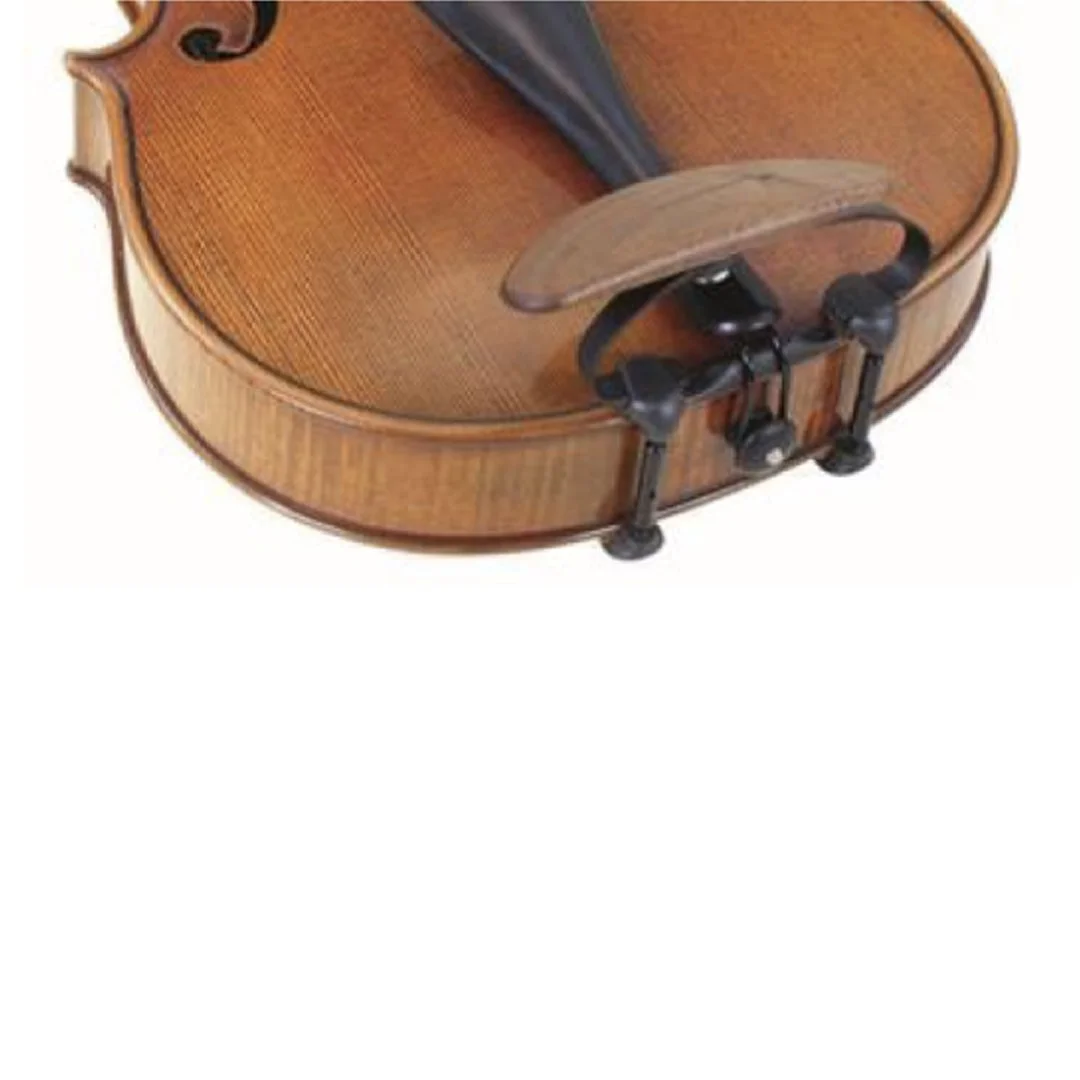
THE WORLD'S LIGHTEST & FIRST EVER FLEXIBLE CHINREST!
Lovingly crafted in Germany from just 15 grams of custom lightweight and sound-optimized materials, the PIRASTRO KorfkerSpring® is another outstanding addition to the Korfker range. With this innovative chinrest, inventor and product developer Berent Korfker redefines the standards for playability, acoustic fidelity, and sound projection, while the flexibility of its suspended chin plate enables freedom of movement and upper body tension release.
The position, height, rotation and tilt of the meticulously shaped, hardened Swiss maple chin plate are fully customizable allowing comprehensive individual adjustments. The low springs offer a more conventional chinrest feel, while the higher springs allow players with a longer neck to play more comfortably than ever.
Designed for both violin and viola the PIRASTRO KorfkerSpring® paves the way for effortless self-expression and the discovery of the instrument’s full potential.

Comfortable and Secure Wittner Violin Chinrest
The Wittner side mount chinrest for 3/4 violin is made of ''high-tech'' composite material and is non-allergenic. Smooth lip for added comfort and separate legs have an easy-to-install secure fitting.

Wittner Side Mount Viola Chinrest - Lightweight & Non-allergenic
The Wittner side mount chinrest for viola is made of ''high-tech'' composite material and is non-allergenic. Smooth lip for added comfort and separate legs have an easy-to-install secure fitting.