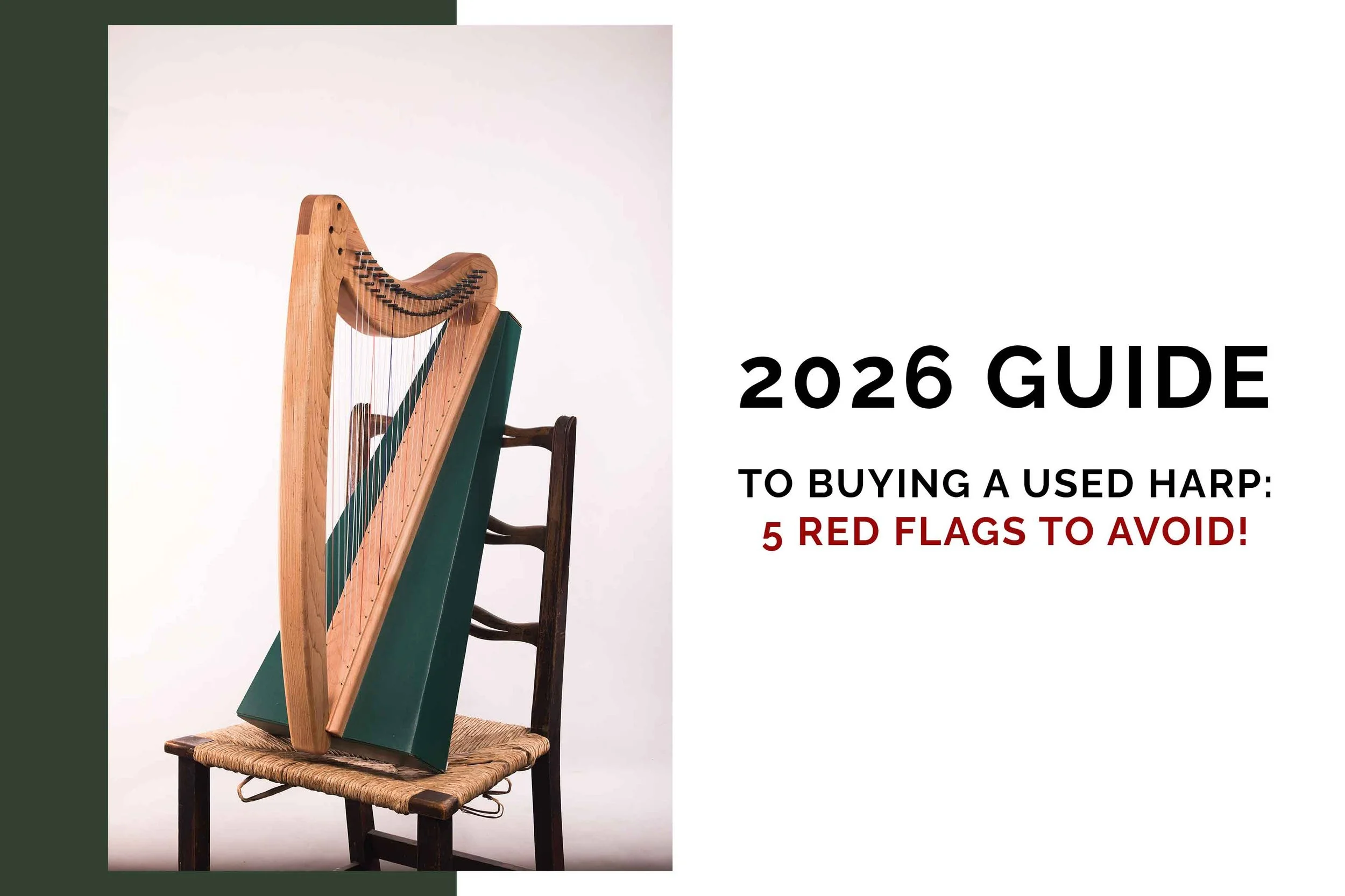
2026 Guide to Buying a Used Harp: 5 Red Flags to Avoid!
Buying a used harp can be a precarious venture. Caviat Emptor applies in a significant way as harps can have hidden “traps” that make them poor investments as used items. A good, well-taken-care-of harp sold used can be a phenomenal value – plus some great harps are no longer made, so used is the only option. Careful selection can yield great results, but it’s good to be wary and cautious.
It’s wonderful to see and hear a historic harp, an old Lyon and Healy, for example, or a vintage Salvi. But most harps built have a limited lifespan which is why they rarely appreciate in value. If you purchase a used harp, you should be getting a good value as most do not have historic value or strong provenance (history of ownership).
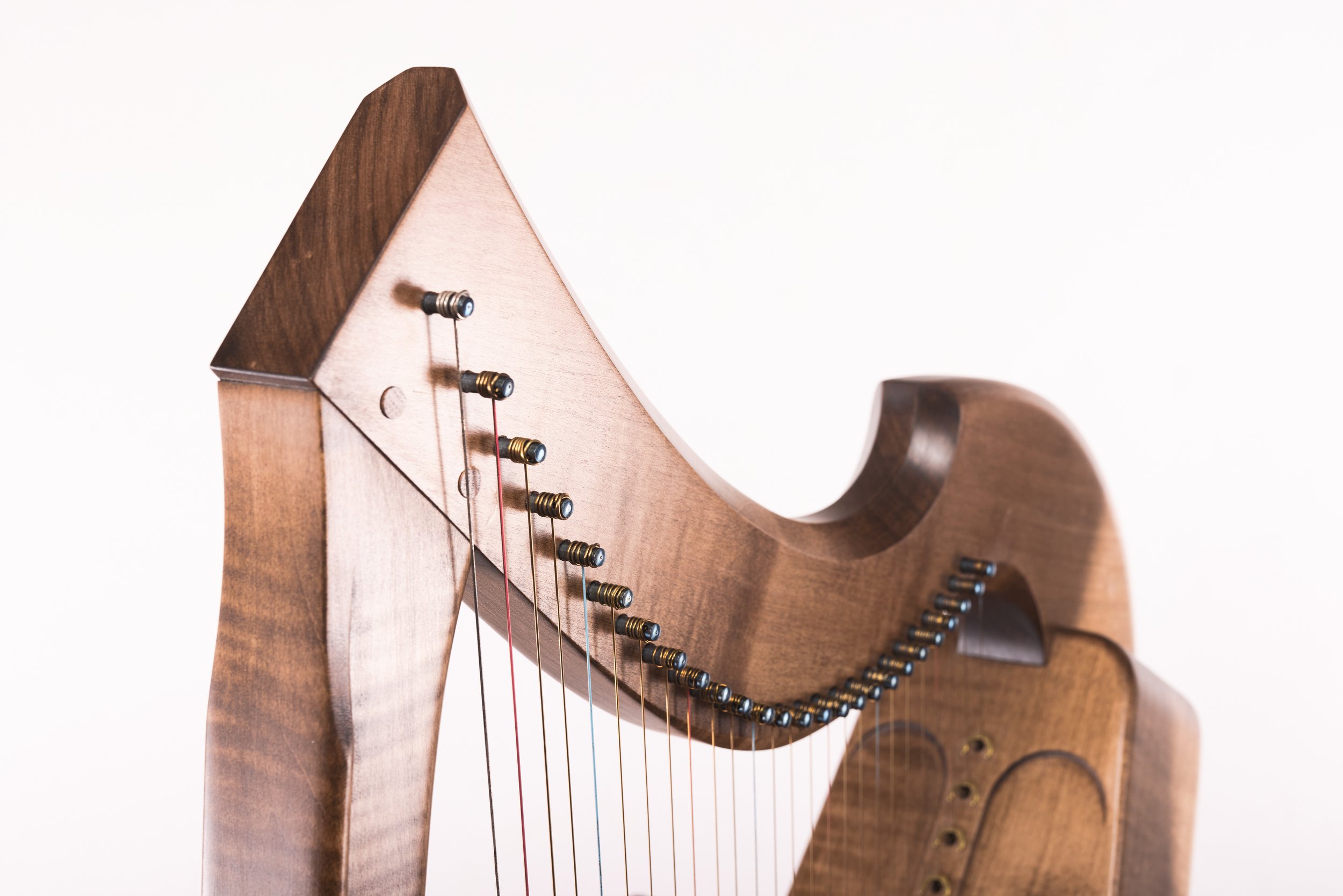
Remember that a harps construction requires many, many string pulled tight over a relatively thin piece of wood (the sounboard) and attached at the other end to a arched beam (the harmonic arch) that extends laterally from the soundbox to the column and is pulled hard on one side by the tensioned strings. This puts a considerable strain on the wood which over time can develop into problems: some minor, some catastrophic.
Following are five things to consider and be aware of if purchasing a used harp! Remember, that unless you purchase from a qualified harp dealer near you, the option to return will range from limited to non-existant. It is always good to trust who you are buying from! A dealership should have a good review history and/or come highly recommended. An ebay or facebook seller should likewise have good reviews.
1. Most used harps sold have been sitting quietly for some time. On a lever harp, the strings will age and the regulation of the levers will become irregular. So, when buying, check the regulation (see if the levers, when flipped, move the note exactly what it should F to F#, for example, not partway). Nylon strings are strong and last a long time, but other strings, especially gut strings, have a shorter lifespan so chances are these will need replacing when you bring it home. So ask how old the strings are or when it was last regulated. If the harp is out of adjustment, it’s not a big problem, but you’ll want to factor the correction into the cost of the harp: a few hundred dollars at least.
2. Warping: Warping is a troublesome event in the lifetime of a harp. A warped neck or column can create irregular tenstions on the strings, or even result in serious damage. Warps start small, but once started develop into large problems relatively quickly. Stand in front of the harp and look square on at the piller does it curve to the right (most likely) or left? IT should be extremely straight.
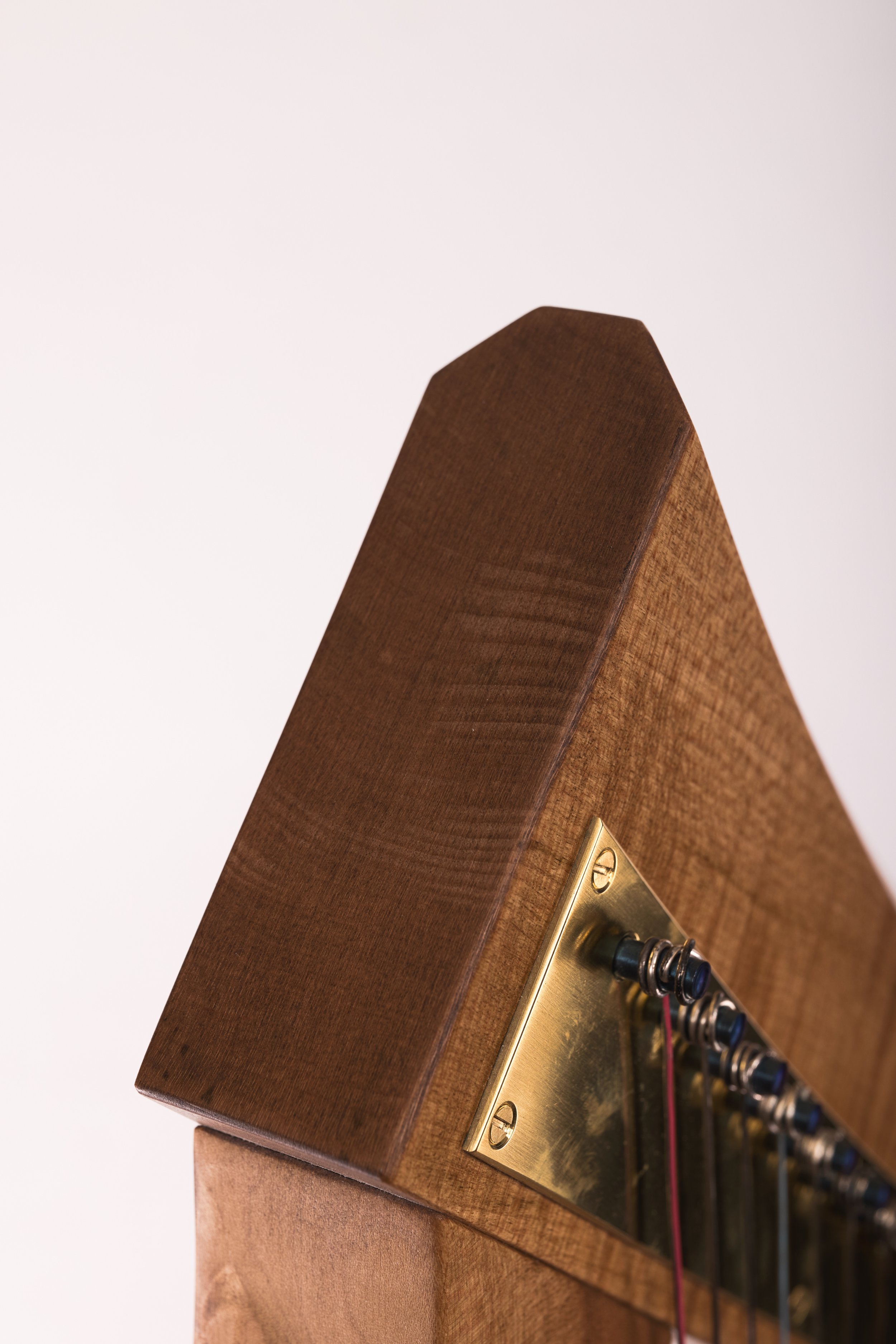
3. Also look at the harmonic arch: that too should project perfectly straight from the soundbox to the column. Side-to-side bends may eliminate this harp from consideration!
4. Take a close look at the soundboard. Where the strings move through the tiny holes, there should be small eyelets that protect the wood. These eyelets are prone to cracking and breaking, and when that happens, the strings can wear or, worse, crack the board. Replacing broken eyelets is an important thing to do when you purchase a used harp – it’s not an expensive repair but quite important. As you are looking carefully at the soundboard, look for tiny spiderwebbing cracks. These can be hard to see through the grain lines of the wood, but they will extend in many random directions, usually originating near the string holes. Spiderwebbing indicates a short life span!
While you are studying the soundboard, you might notice that the board is not straight, but slightly bellowed out towards you. The many strings are pulling the board forward. Don’t be alarmed by this – it’s a natural part of the harp’s history. The bellowing of the soundboard is anticipated and actually helps warm the tone of the instrument…it’s one nice thing about buying a pre-loved harp!
5. Take a flashlight tour of the inside of the harp and look up and down the inside of the soundboard. Light should pass only through the soundholes! You can see from here the seams and know for sure that they are all closed tight. Open seams are not huge issues usually, but like any other repair will be an expense to you after you bring her home so it should be factored into the price you pay.
A pre-loved harp can be an excellent budget-friendly option for your next harp, but a “good deal” can become an expensive money-trap quite quickly if problems arise. New harps of course, come with advantageous warranties (usually 3 years on most lever harps), but if the harp was well taken care of, stored in well-humidified rooms, it could bring joyful music to your home for many, many years!
Note: It takes approximately 7 to 14 working days to ship consignment products depending on the type, location, and shipping considerations.
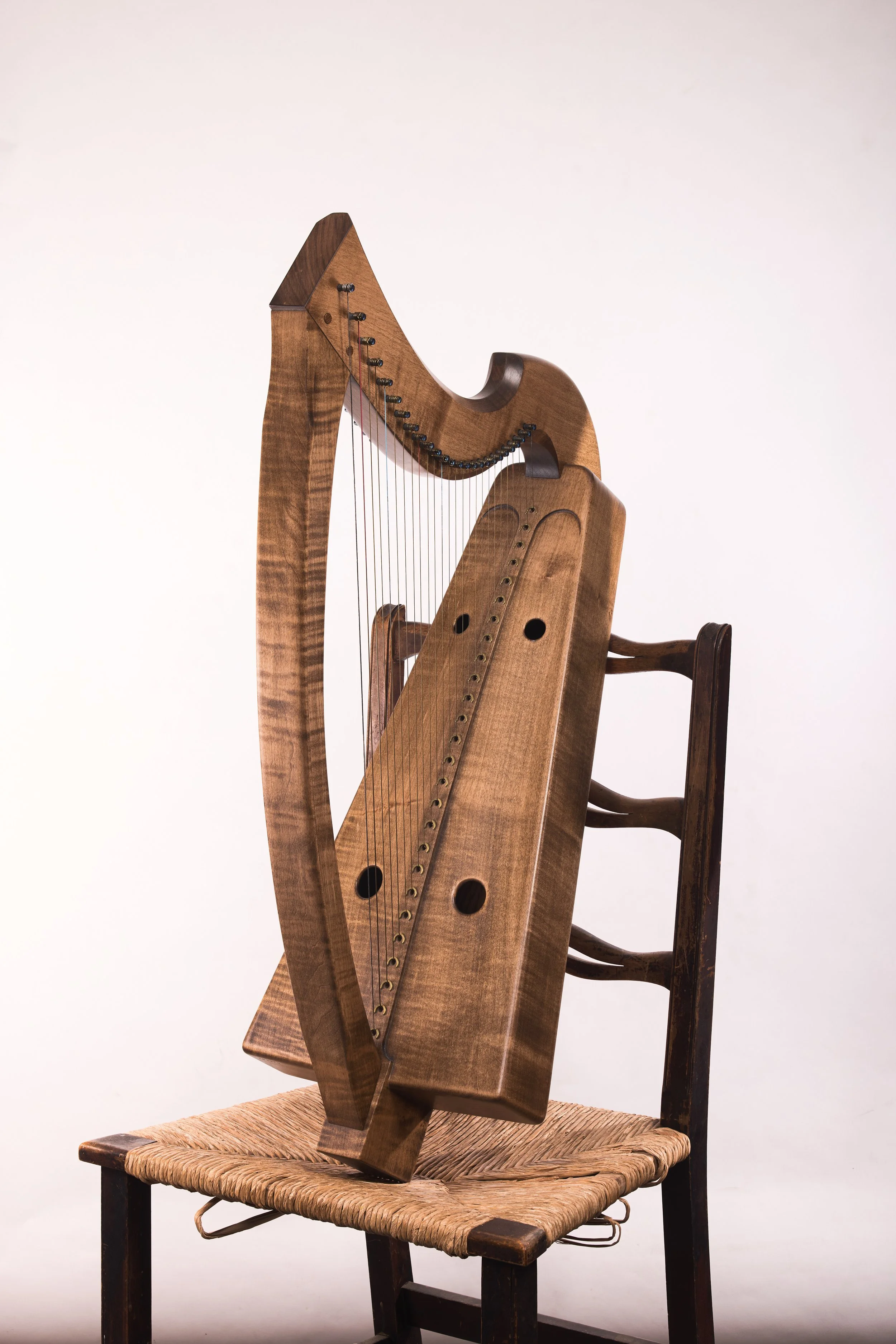
From Ardival Harps of the small village of Strathpeffer in the Scottish highlands, this lovely little 26 string harp is named the “Rose,” after the owners fo Kilravock Castle which displays a carved image of mermaids playing the harp from which inspired this harp. Weighing in at only 11 pounds with a range of G-f (all brass strings with one silver G bass), this harp offers both portability without compromise of tone or tone volume. The full sound comes from the carved Sycamore soundbox. . It is a lovely instrument and will fill your home and heart with joy. Purchased originally (new ) in 2021. Comes with case and tuning wrench
Note: It takes approximately 7 to 14 working days to ship consignment products depending on the type, location, and shipping considerations.
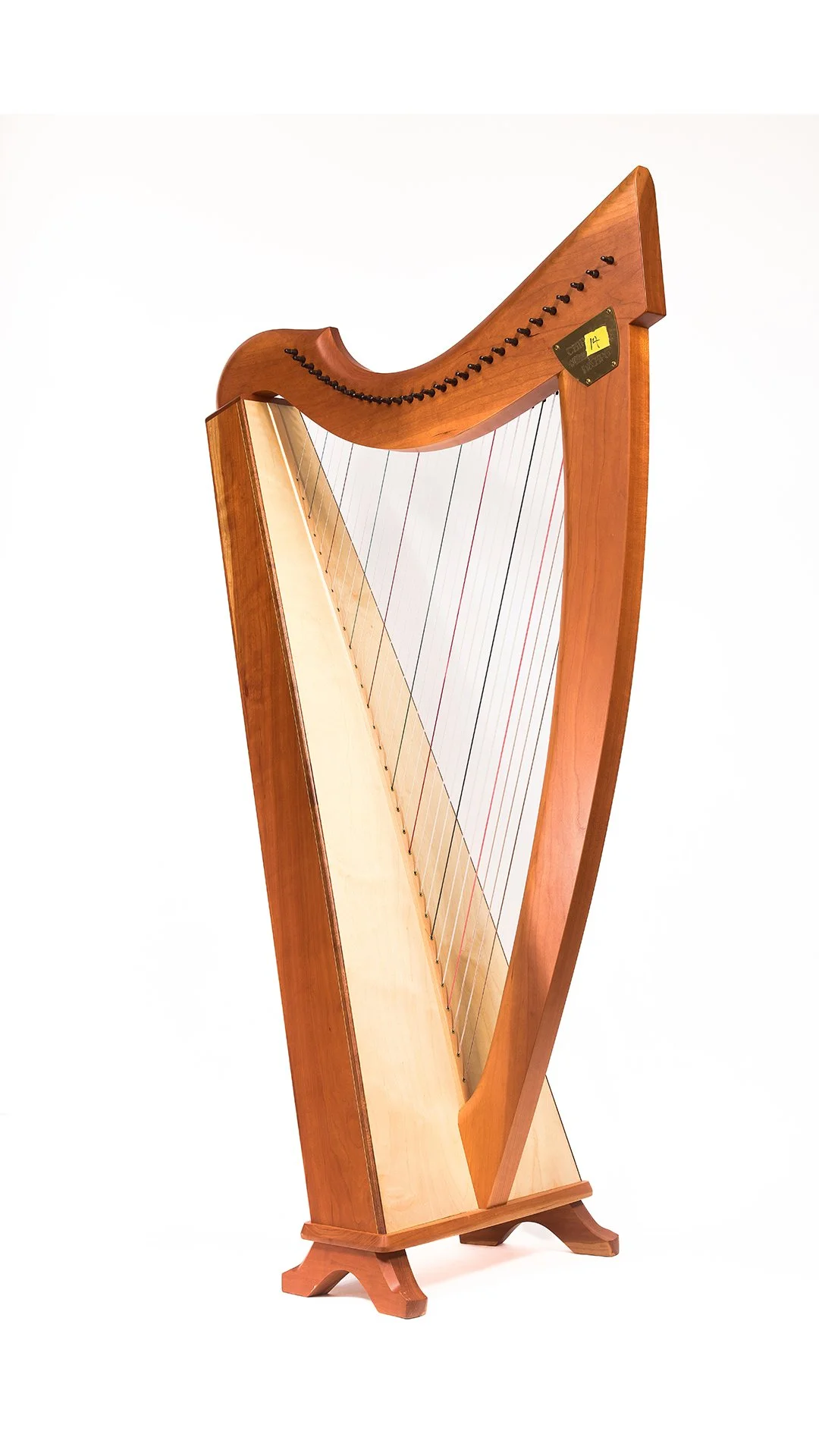
"Triplett "Liberty" harp, 30 strings, fully levered. This beautiful harp from the USA based Triplett company is a design no longer offered (closest is the Sierra 30) but is in outstanding, like-new, condition despite its age of ~25-30 years. This harp is fully levered. Used in a teacher's studio, so light use only. The Cherry wood shows the unique and gorgeous patina of aged cherry and the nylon strings offer a bright and uplifted tone that sparkles with celtic radiance! These harps are roughly $4500 plus a padded travel bag ($300) new. This harp is offered at $3400, bag included."
Note: It takes approximately 7 to 14 working days to ship consignment products depending on the type, location, and shipping considerations.
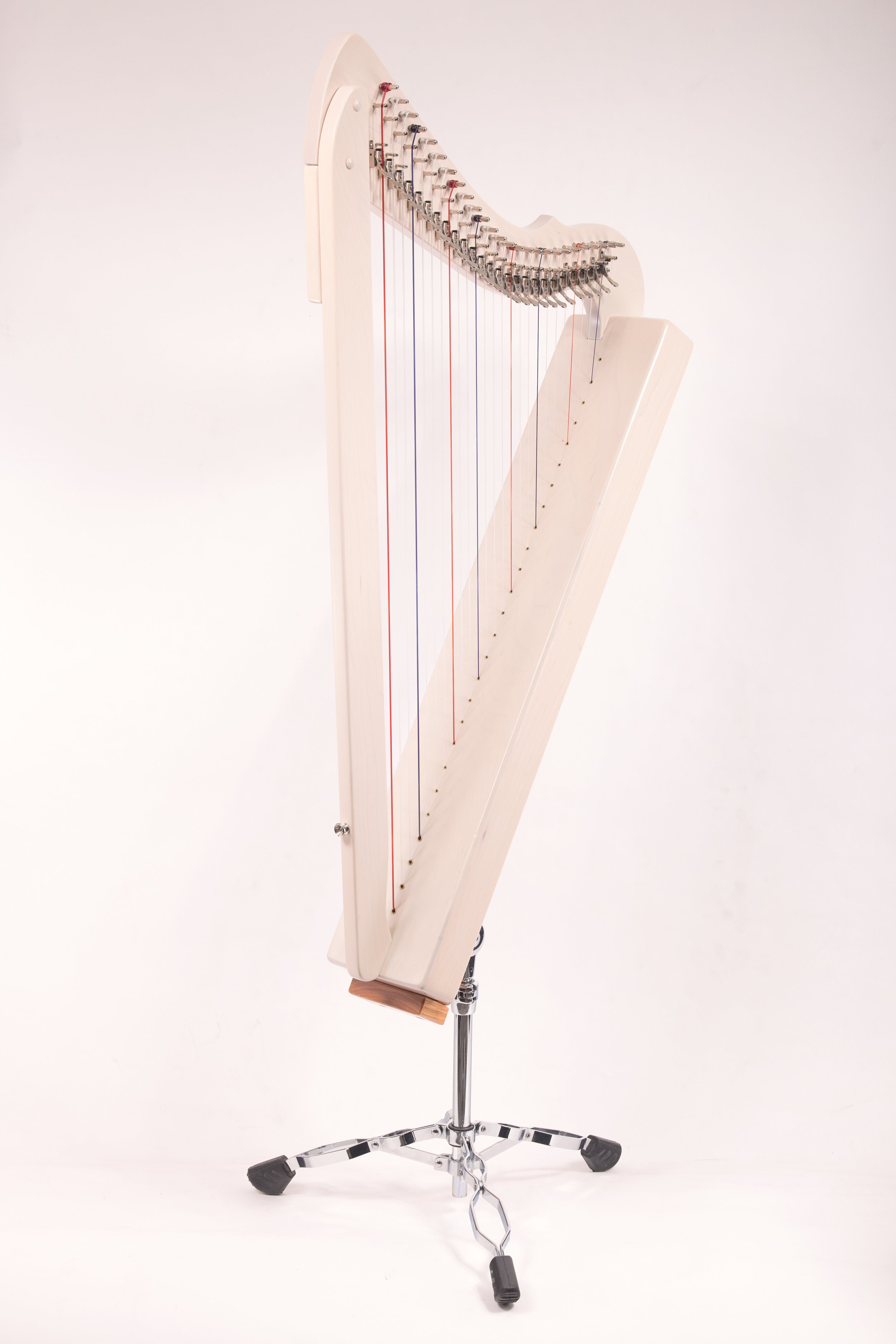
Excellent starter harp or for anyone wanting a super-portable, easy to access harp that is extremely well made, low tension and easy to play. Nylon strings are durable. Weight is only 5 pounds and each string is levered with the Rees original levers. This harp can be played as a lap harp or a floor harp, using the adjustable stand ($180 value) that comes with the harp. This pre-loved harp has had one owner and was purchased in 2019 new. Harp is normally $1350, this harp is offered at $995, inclusive of the stand.