The Value of Quality: Why Rental Matters
Parents often express concern about the cost of learning the violin. Lessons, instruments, orchestral fees, and audition fees can quickly add up. But is it truly expensive?
Read More
Parents often express concern about the cost of learning the violin. Lessons, instruments, orchestral fees, and audition fees can quickly add up. But is it truly expensive?
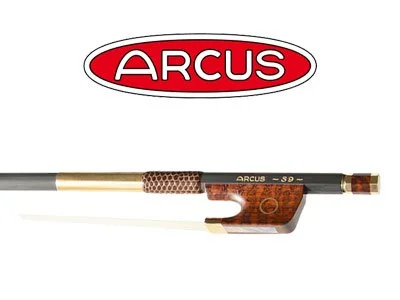
Read More“Why should I choose a carbon-fiber bow?”
“Isn’t a wood bow the standard, especially for a wooden instrument?”
Whereas wooden bows have been used on strings instruments as early as the Islamic civilization in the 10th century, carbon-fiber bows only began to appear a few decades after high-tensile strength carbon-fiber was invented. CodaBow founder Stan Prosen had developed some of the earliest carbon-fiber parts with inventor Dr. Roger Bacon and had found in his early research a profound resonance in the new material. After years of testing and creating prototypes, early CodaBow bows had entered the market, and other music companies had begun developing their own versions to compete. Today, dozens of companies produce carbon-fiber bows in a large range of styles, price ranges, and instruments. With so many options on the market…
Read MoreDiscover the convenience and precision of clip-on tuners at Vermont Violins, where we've honed our craft for generations. From enhancing your practice sessions with accurate tuning to aiding in developing your musical ear, our range of quality clip-on tuners ensures your instrument sings its truest notes in any setting.
Read MoreBridges in violin making are not just pieces of wood; they are meticulously carved to exact dimensions, with varying levels of quality affecting their resonance and tone transmission. Each bridge is a testament to the artistry and precision of luthiers, reflecting hours of craftsmanship to ensure every violin sings in its finest voice.
Read MoreJoin Vermont Violins on a 30-year musical journey! From humble beginnings in 1994 to navigating global changes, we celebrate diversity, craftsmanship, and sustainability. Explore our evolving story!
Read MoreWith the new limitations on Pernambuco import/export, bow owners must take extra precautions to ensure that their bow is both legally and ethically made. Pernambuco, an endangered wood species, is the most frequently used wood in bow making . The high prices this wood earns for this niche manufacturing and artisanal craft is largely responsible for the woods current significant decline in its natural habitat, Brazil. -It’s a little more complicated, yes, it is hard to plant elsewhere, but the Brazilian government does not allow the export of Pernambuco seeds/saplings either.
Read MoreYou’ve heard great things about them….but you can’t figure out which one is for you!
We can help!
Read MoreOne of the hallmarks of the Vermont Violins Rental Program, is the equity accrual terms. With our rentals, you are not only renting a fine instrument, but actually building an equity pool for yourself with which to purchase one when you are ready to move past rental into ownership.
Read MoreVermont Violins is tremendously proud to rent instruments that are beautiful both visually and tonally. Having an instrument that looks good and sounds good will help motivate us to play and will foster better care of our instruments.
Read More‘My home and my violin shop are completely destroyed’: a call for help from a Mariupol luthier
A Ukrainian violin maker whose livelihood has been devastated by the ongoing Russian invasion is calling for help.
Read MoreThis is an unabashed plug for a string-oriented music camp if your child plays a bowed, string instrument. Here is why:
1) Maintaining fine motor skills.
2) Expanding the student’s peer group
3) Having fun with music
Read MoreYou’ve decided to play the violin or your child has announced his or her intention to play the cello and you are faced with the perplexing situation of trying to find one to rent. A quick search of the internet and you’ve discovered that there are plenty of shops around that offer rental programs for these instruments. Your challenge is to figure out which program makes the most sense for you! Which program will optimize your experience!
Read MoreMost people don’t spend a lot of time thinking about glue. However, luthiers think about glue a lot, and it’s a much more interesting topic than you would think! The type of glue one uses on a violin can impact its longevity and our ability to repair the instrument, which means it’s important for us to make sure we’re using the best glue possible. But which glue is the best kind of glue for violin making?
Read MoreOne of the most common questions we get asked about our Made in Vermont violins is; “who is V. Richelieu?” (“How do you spell that?” takes a close second).
Read MoreViolins come in LOTS of sizes for children... our staff is always available to help determine which size instrument makes sense for your child. Schools and Suzuki programs, however, frequently size differently. Below are two general options. It is important to check in with your teacher to find out their specific preferences. The shop will defer to the teacher’s preferences.
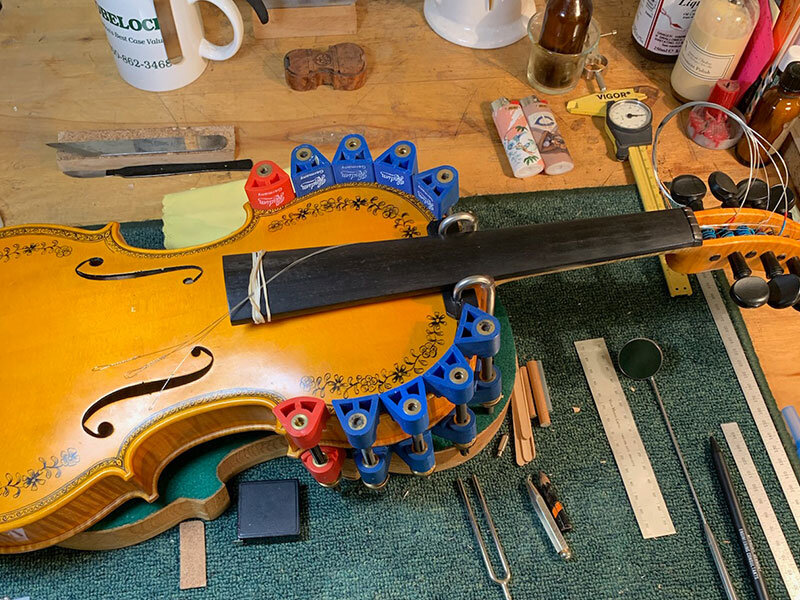
Read MoreVermont Violins is almost always looking for more luthiers to join our team – we thought we might offer a few thoughts on what we look for in new team members and how you can launch a career in violin making, repair and restoration.
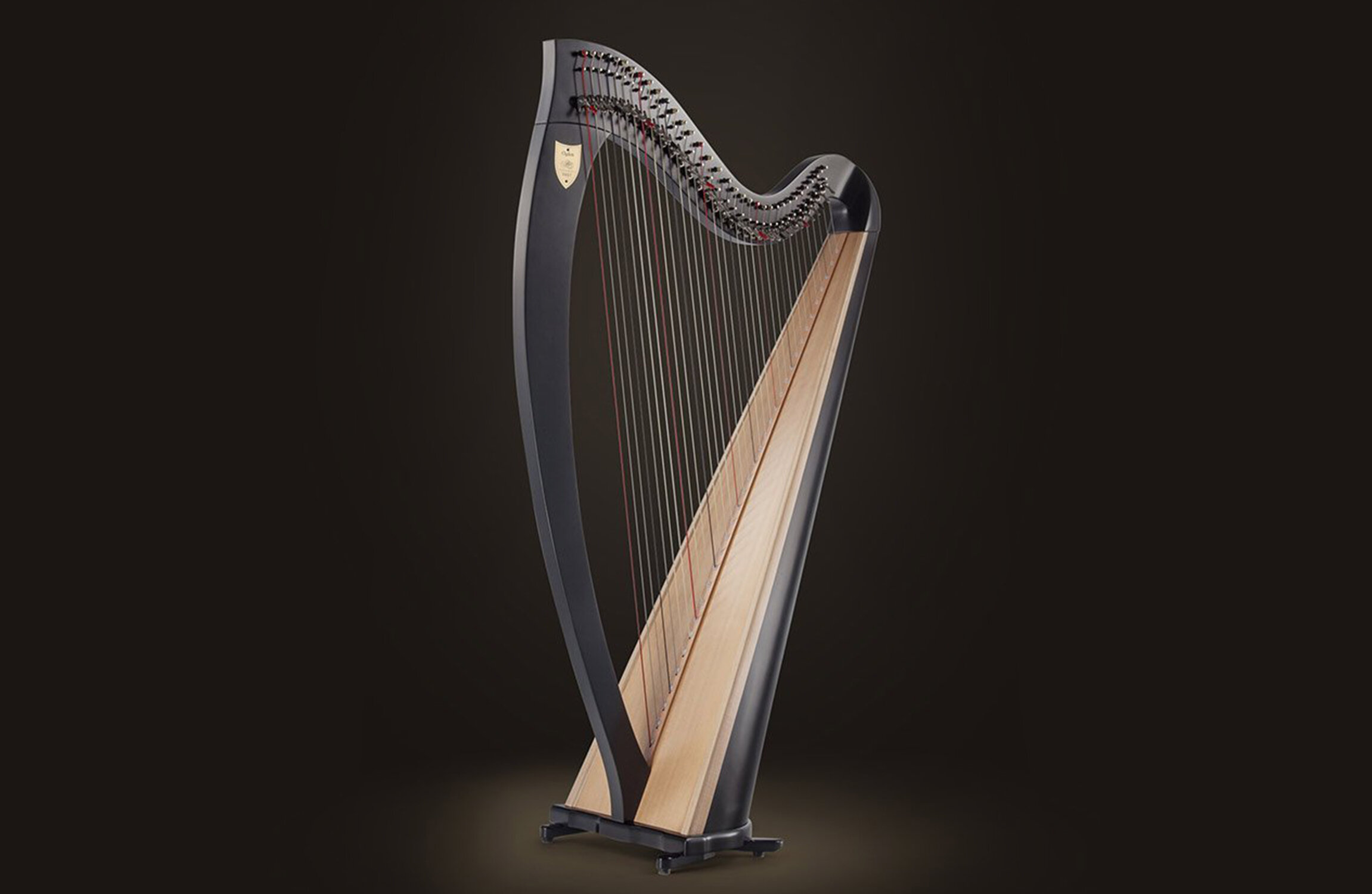
Read MoreWhether you are new to music or have a lifetime of playing behind you, the Celtic Harp is one of the most immediately rewarding instruments you can play. We’re often asked: “is the Harp difficult to learn?” and the answer is no.
The weather in New England can fluctuate very rapidly. Both temperature and humidity can change on a dime. As bad as these changes can sometimes be for us, it can be even worse for stringed instruments. Violins, violas, ‘celli and basses are incredibly sensitive to humidity changes, more so than temperature. You know how the doors of your house swell in the summer and creak and crack in the winter? The same thing is happening to your instrument. Since your instrument is constantly under tension from the strings, getting too dry can lead to extreme (and expensive) damage.
Read MoreSonowood is a wonderful alternative to the rare ebony in use on fingerboards, nuts and saddles. We are proud to be the North American importer of this fine material. It is at least as strong as ebony, visually beautiful and easy to work with. Ebony is a rare natural resource that needs to be protected. Finding natural alternatives, like Sonowood, should be a priority for violin makers and luthiers.
Read More