
Protect Your Instrument from Winter Damage
Tips For Instrument Maintenance
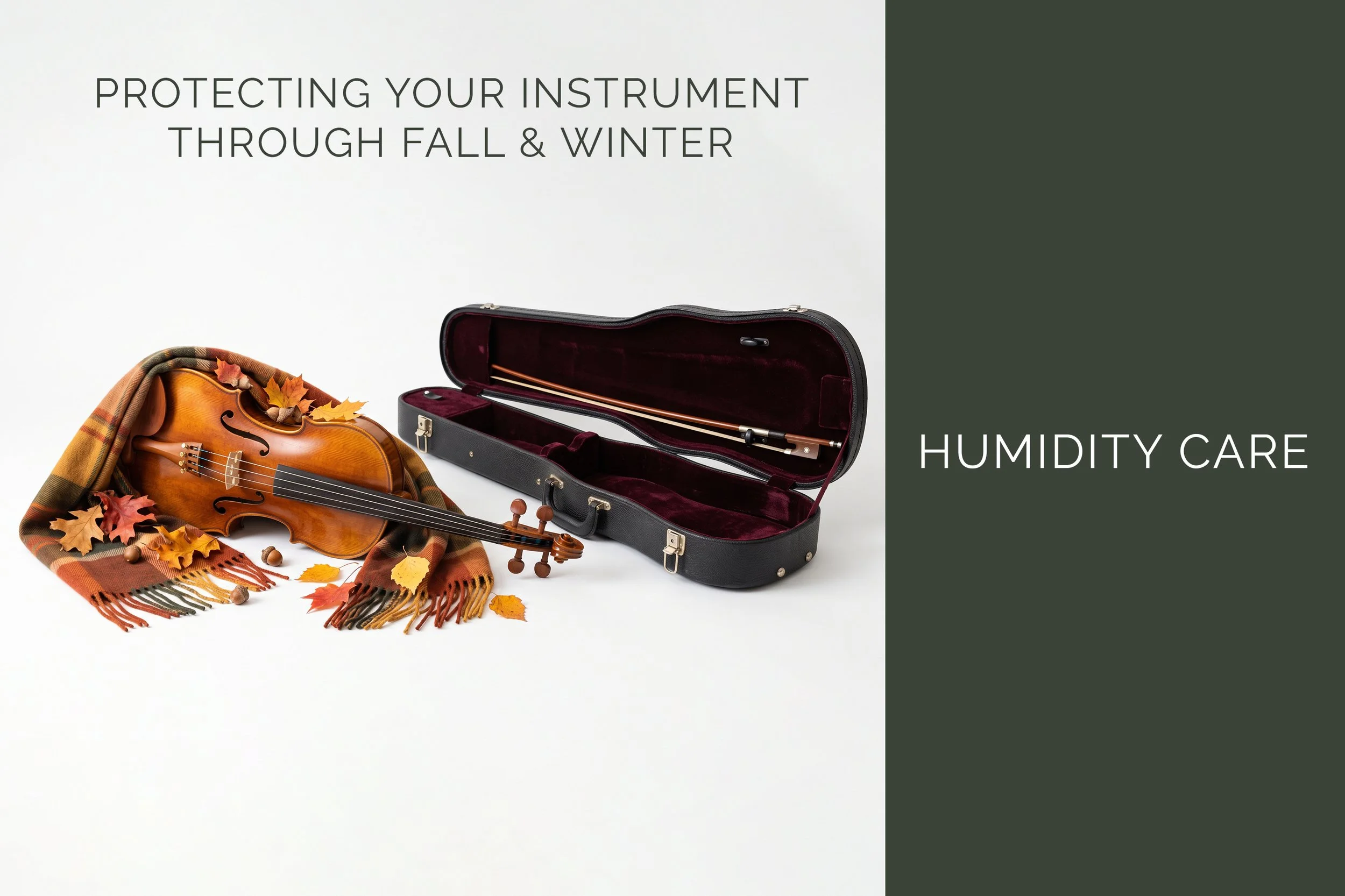
A lot of people live in places that are dry or have very little change in temperature and humidity. But up here in the frozen north of Vermont, we celebrate four distinct seasons. Each season brings new levels of humidity and temperatures, and this can be hard on your instrument.
As we move into the fall months, when the thermostat goes down, we experience drier and drier weather, culminating with complete aridity in January and February. As the temperature drops, humidity also drops.
How Low Humidity Can Be Hard on an Instrument
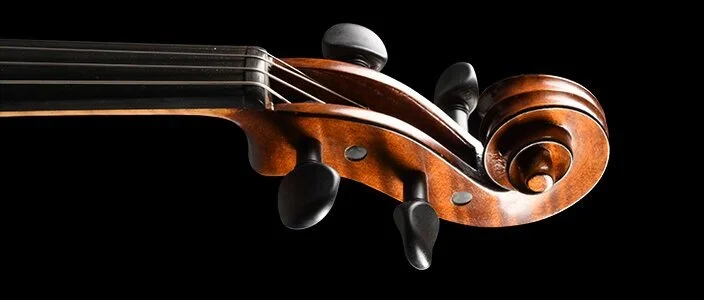
Humidity can be hard on an instrument. As temperature and humidity drops, it can cause the woods to contract and the pegs to start slipping. The woods contracting in turn leads to:
Open seams, if you're lucky
Top cracks or back cracks, if you're not
The instrument tending to become a little less vibrant
Pegs starting to get very slippy
It's important, as a diligent violin owner, to be vigilant about humidity and to address issues proactively so that you're not faced with inconvenient trips to the shop or devastating damage to your instrument.
The Easiest Way to Protect Your Instrument: Room Humidifiers
The easiest and simplest way to protect your instrument is to keep your home well humidified. Home Depot, Lowe's, or your favorite hardware store often has a good selection of large volume capacity room humidifiers.
These can be preset to certain humidity levels—we recommend 45 to 50%—and will run constantly in your home or a portion of your home to maintain proper humidity levels that will be helpful and protective of your instruments, and make your home more comfortable.
In-Case Humidifier Products
If your home is not super tight or contains large areas and larger rooms, keeping adequate humidity can be a challenge. Therefore, there are a number of in-case humidification products that can also help keep your instrument at a good humidity level.
Our Favorite Product: Two-Way Pack System
Our favorite product started creating humidity systems for the cigar industry, but has adapted its technology to a much broader list of products, including violins and other musical instruments.
The pack comes in two parts:
The Outer Sleeve: An outer shell that costs about $10 and is a one-time purchase.
Disposable Inserts: A sachet filled with a liquid saline solution that releases into the case until it reaches the desired humidity level.
The ones that we sell are calibrated to 49%. The sachet will also absorb moisture, which is an added bonus: in the summertime, when it gets very high humidity, it will actually absorb some of that humidity and keep your instrument at a lower humidity than the high humidity it is exposed to. High humidity can also be damaging to the instrument, though in northern climates of Vermont, getting such high humidity is not as common or as threatening as the low humidity of the wintertime.
When working properly, the sachet will last for about a month and a half with no maintenance. You do not have to constantly recharge it, fill it, or do anything to it. It just sits in your case and releases appropriately until the sachet is no longer functional. At that point, it will be hard and crusty, no longer liquid, and you'll know it's time to throw it away and replace it with another one.
These are very inexpensive—they run under $5 a piece. In the heart of the winter, when it's working the hardest, the total duration that we have experienced is about a month and a half.
For sizing:
Violins and violas: One will suffice.
Cellists and larger instruments: Will need two of these in their case.
Starter set: The total system costs $20 to $25 for a good starter pack with multiple inserts.
Other In-Case Systems
Other systems are also available and can also be very effective.
The Strato System: This is our second favorite, but this does require constant vigilance in maintaining and soaking the hyper-sorbent sachet that sits in the plastic chamber it comes with. Refills for these are also available and also inexpensive.
Moisture Containers to Avoid: We do not recommend humidity systems that involve putting any kind of moisture or moisture container inside the body of your instrument. The "green snakes" were popular a few decades ago, and we still see them in use occasionally. When used properly, they work fine, but it's very easy to oversaturate them. This will ultimately release water into the inside of your instrument, warping your ribs or other parts of the instrument, and causing mold damage as well.
Diligent Care for Northern Climates
Violins are extremely well suited to northern climates as well as southern climates. Violins play an active part of our historical culture, but violin owners need to know that careful, diligent care of your instrument is required in the wintertime. We highly recommend these products to protect your instrument through the cold winter months.

Maintain Ideal Moisture Levels with Boveda for Wood Instruments
Automatically responds to any storage environment, geographic location or change in temperature
Adds or removes moisture on its own (eliminates messy sponges, hoses, discs, etc.)
Maintains a constant relative humidity (RH) between 40-60%—the ideal climate for wood instruments
Don't store your instrument without Boveda
There's a specific geometry built into your instrument. Precision crafted in a climate-controlled shop. An artisan used intense heat, moisture and pressure to bend wood to shape your instrument. Now the care and keeping of that wood is in your hands.
Developing and fine-tuning your repertoire put significant demands on your instrument. If you expose your instrument to humidity swings day after day, you can throw off its delicate alignment and cause permanent distortion. Improper storage is the greatest constant danger to the condition of any wooden instrument.
Storing your wooden instrument in a stable environment created by Boveda preserves your instrument, and maintains its sound, so you avoid taking repairs due to:
Cracking
Warping
Sagging
Glue damage
Boveda works automatically (& solo) — so there's nothing else to add
No more adding water to sponges, hoses, or discs. No more risk of moisture puddling inside your instrument. Boveda eliminates the hassle (and danger) of one-way humidification methods. These methods spike humidity when you add water, and take a nosedive as the water evaporates.
Boveda is pure water and natural salts sealed inside a leak-proof membrane. Boveda adds and absorbs water vapor slowly and precisely to achieve and maintain an RH level between 40% – 60% in your instrument’s closed case.
How to use Boveda
Just slip the unwrapped Boveda(s) in the pouch holder. (Do not open the Boveda itself.) Nestle the pouch holder in a storage cut-out in your case where the holder will not be crushed.
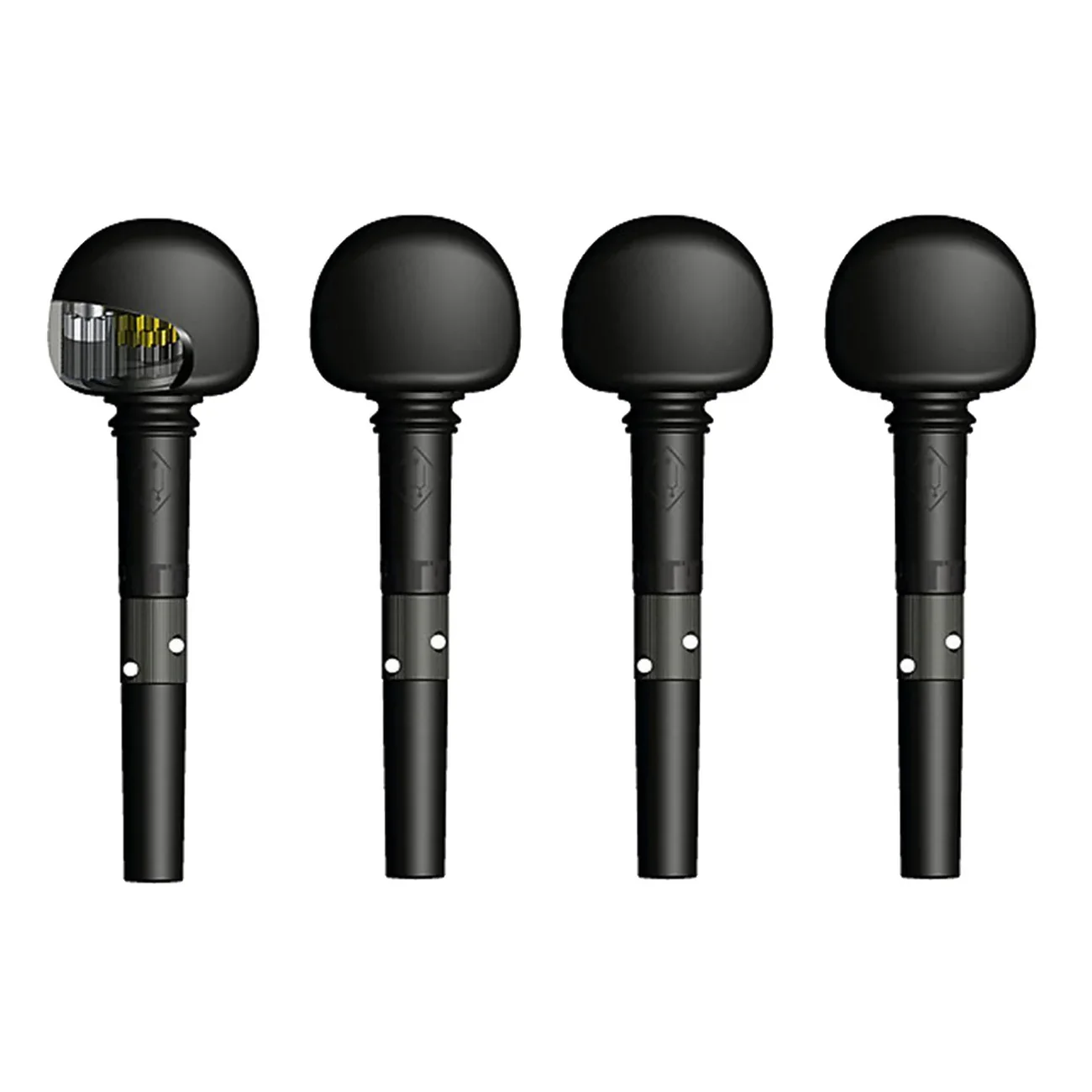
The wittner finetune geared pegs, a “non-slip” peg solution for your violin. For proper sizing, check out our infographic. Wittner finetune geared pegs are measured by diameter at ring.
Available in different size options:
- 7.8mm Violin (for 4/4 - 3/4 size violin)
- 8.6mm Violin (for 4/4 - 3/4 size. violin)
- 7.2mm (for 1/2 - 1/4 size violin)
Wittner Finetune Peg Set includes 4 pegs
Made from composite and light alloy material, maintaining the traditional hardwood appearance demanded by professional musicians. Installed by pressing into place without glue. Peg shaft stays in place, and tuning is done by turning peg head. There is no peg/pegbox friction, and peg is not affected by climate and humidity changes.
Only the button and the geared middle section of the shaft on which the string is wound, moves. The Fine Tune pegs have an internal gearing ratio of 8:1 for precise tuning.
We recommend installation by a professional. Before placing your order, we recommend looking at the sizing chart for proper sizing.
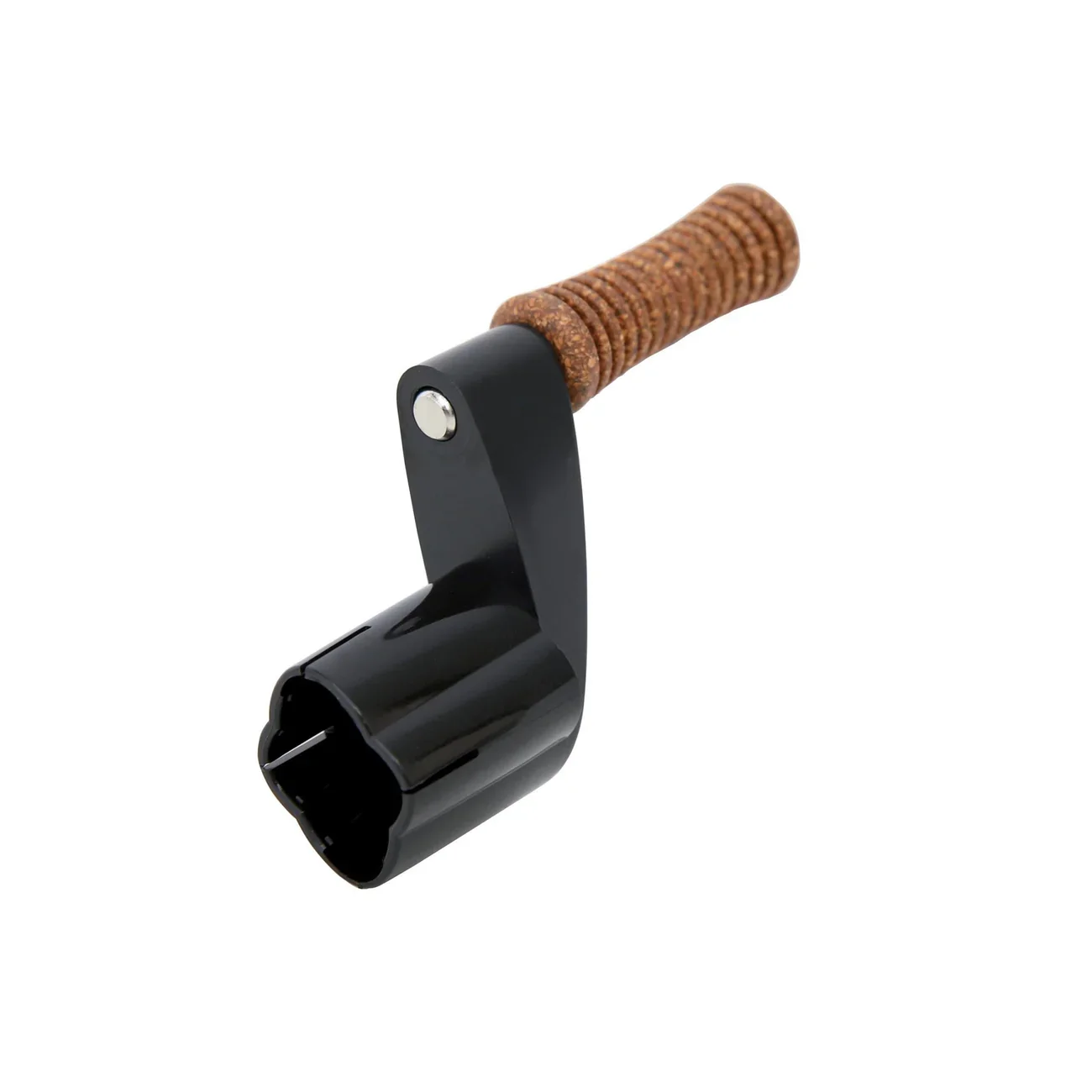
The Wittner Finetune Violin/Viola Peg Winder is a handy tool designed to make string changes faster and easier for instruments equipped with Wittner Finetune geared pegs. It allows for quick, smooth winding and unwinding, significantly speeding up the process of installing or removing strings.
Compatible with most pegs for Violin, Viola, Flamenco, and Ukulele, this compact and easy-to-handle tool is a practical time-saver for players who want efficient, stress-free string changes.

Preserve Your Violin's Tone with Stretto Humidifier
The Stretto from Switzerland is simply the most effective system for maintaining a safe and consistent humidity level in a case's interior. The Stretto bag effectively humidifies for up to two weeks. When ready to rehydrate the bag, simply re-soak in water (use distilled water for best results). Benefits to the player include an instrument safer from the risk of cracks, more consistent performance, and bow hair that does not dry and shrink (causing higher tension risking warpage or even tip breaks).

Protect Your Cello from Dryness with Stretto Humidifier
The Stretto from Switzerland is simply the most effective system for maintaining a safe and consistent humidity level in a case's interior. The Stretto bag effectively humidifies for up to two weeks. When ready to rehydrate the bag, simply re-soak in water (use distilled water for best results). Benefits to the player include an instrument safer from the risk of cracks, more consistent performance, and bow hair that does not dry and shrink (causing higher tension risking warpage or even tip breaks).