
Raising the Bar: Paul and Ari Bring Jon Paul Bows Training to Vermont Violins

VERMONT VIOLINS NEWSROOM – The intersection of master-tier lutherie and material engineering took center stage at our South Burlington workshop this week. Vermont Violins was honored to host Jon Paul Bows founder and chief engineer Paul Prier and his son Ari, pioneers in alternative and carbon composite bow design.
Paul and Ari conducted an intensive, deep-dive technical masterclass for our sales staff and workshop luthiers, detailing the acoustics, internal micro-structures, and sustainability initiatives behind the bow making company, based in Salt Lake City Utah.
For string players, a bow is not a mere accessory; it is the physical catalyst of an instrument's friction and core resonance. As global regulations tighten around traditional forestry products, Jon Paul Bows has spent decades proving that advanced composite engineering can meet—and exceed—the exacting physical standards of historic Pernambuco wood.
- Event: Jon Paul Masterclass & Staff Training. Bows available for Sale at Vermont Violins
- Location: Vermont Violins — South Burlington, VT
- Key Presenter: Paul (Principal, Jon Paul Bows)
- Technical Focus: One-Piece Monocoque Sticks, Vibration Damping, & Alternative Tonewoods
- Target Segment: Advancing and serious string players seeking a high-performance alternative to pernambuco — from dedicated students stepping up from beginner equipment to professional musicians who demand tonal warmth, structural integrity, and lasting playability at an accessible price point.
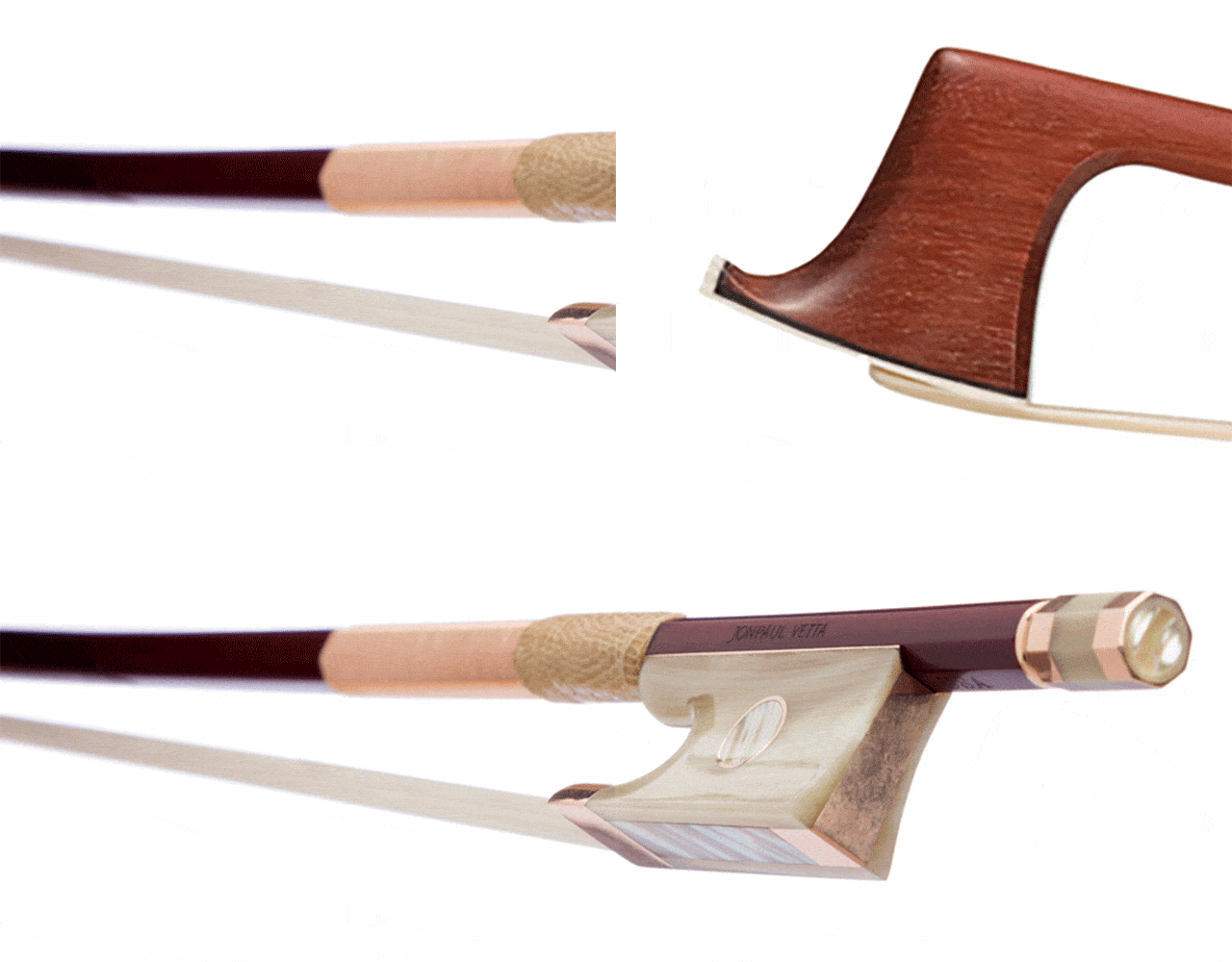
The Monocoque Principle: Eliminating Structural Weak Points
Traditional carbon fiber bows are often constructed using a two-piece framework. The head of the bow is molded or carved as an independent block and subsequently bonded or mounted to the main shaft.
Paul demonstrated how this conventional method introduces severe physical and acoustic compromises to an instrument:
Mechanical Stress Convergence: The head-to-shaft seam creates a permanent structural weak point vulnerable to fracture under intense playing or accidental impacts.
Acoustic Discontinuity: The adhesive layer acts as a literal dampening acoustic wall. Vibrations initiated at the hair-to-string contact point travel up the stick but are abruptly choked at the junction seam. This robs the player of tactile sensation in the final inches of the bow tip.
To completely bypass this design flaw, Jon Paul Bows implements a complex continuous one-piece monocoque stick construction. The entire bow—from the button winding to the peak of the crown—is woven and cured as a singular, unbroken carbon composite sleeve. This seamless architecture ensures uniform tensile strength throughout the bow's entire length while allowing high-frequency vibrational feedback to ripple cleanly into the player's fingertips.
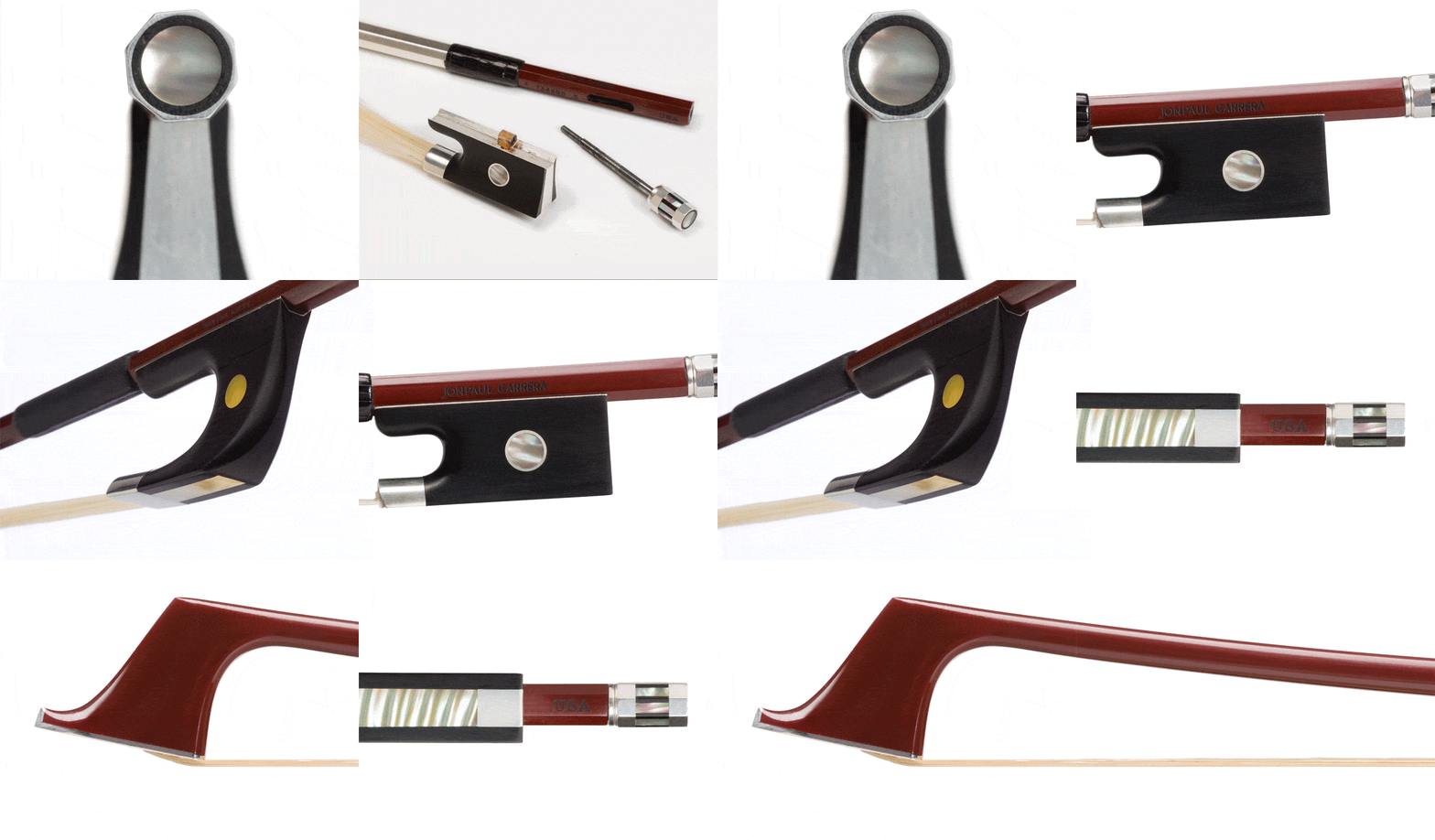
Technical Unboxing: Advanced Metallurgy and Internal Mechanics
During the training, Paul and Ari unboxed several proprietary mechanics that make their bows incredibly robust, suited both for student outfits and rigorous touring professional musicians:
1. Embedded Solid Metal Tips
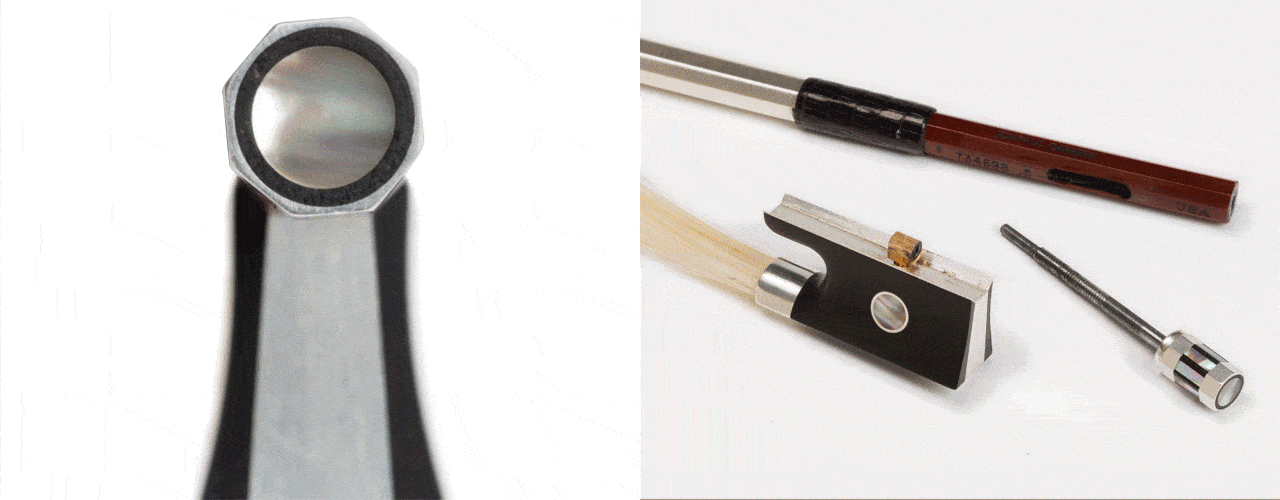
Traditional ivory or plastic tip plates frequently chip or detach under impact. Jon Paul bows feature a full, solid metal tip plate that is directly molded into the head of the bow during the high-pressure resin setting phase. This integration makes the tip exceptionally difficult to fracture, surviving aggressive handling and performance stress.
2. Metal-on-Metal Button Slides
A common complaint among string players is a binding, stubborn, or uneven hair-tightening button. This is usually caused by wood or raw composite friction binding directly against the end of the stick. Jon Paul embeds an internal metal sleeve right into the button channel. The tightening screw rides perfectly balanced on a minute, metal-on-metal contact point. This guarantees a silky smooth, uniform turning action that never binds or skews the straightness of the shaft.
3. Deep-Core Injection Coloring
Unlike cheap composite bows that are top-coated with a thin surface layer of paint, Jon Paul injects its rich colors straight into the structural thermal-setting matrix during fabrication. The coloration permeates entirely from the surface down to the central core. If a player accidentally scratches the stick, the blemish can simply be buffed and polished out with standard violin polishes, returning it to pristine condition.
Decoding the Models: Braid Patterns and Velocity Formulas
A common misconception among players is that all carbon fiber bows sound identical due to automated machine manufacturing. Paul shattered this myth by explaining how changing the directional angle of the carbon braid and altering the resin and fiber formula fundamentally reshapes the bow's acoustic velocity.
Raw, unrefined carbon fiber vibrates at a blistering velocity of over 6,000 meters per second. By comparison, premium Pernambuco wood resides in a slower, warmer sweet spot between 4,000 and 6,000 m/s (averaging around 5,000 m/s). Pure carbon fiber can therefore sound harsh, overly bright, and piercingly two-dimensional.
To counter this, Jon Paul has developed a proprietary formula, a recipe for its fiber weave and biding mediums which incorporates meany fiber materials in a precise formula that creates a tonal response very similar to pernambuco wood. Overall, the bow has a very high fiber content working in a 60% to 70% carbon fiber to resin matrix. This intentional composition retards vibration speeds to perfectly target a rich, organic, three-dimensional tone within a 5,000 to 7,000 m/s range.
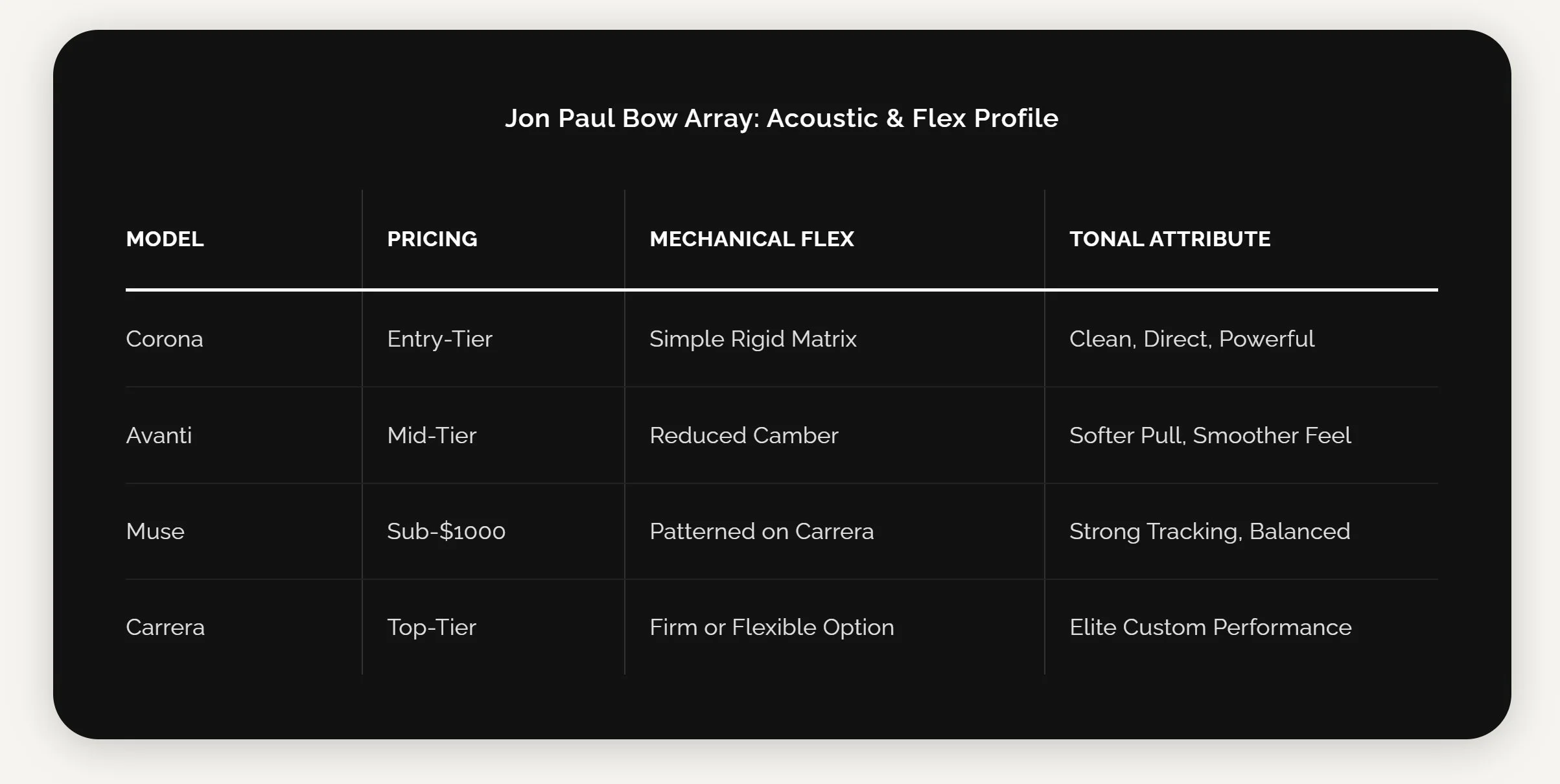
The Corona: Their foundational, highly reliable design focused on effortless execution.
The Avanti: Features a slightly relaxed camber (the vertical curve of the stick), allowing it to pull along the string with a softer, incredibly smooth tracking feel.
The Muse: Developed as a direct response to violin shops requiring an elite option priced under the critical $1,000 budget tier. It is structurally patterned directly after the legendary Carrera architecture to offer master-tier balance at an accessible price.
The Carrera & Vetta: Laser-engraved with an "F" for flexible or an "S" for strong/firm, these top-tier bows offer players custom choices based on their individual tracking preferences and bowing pressure styles.
Sustainable Pioneering: The Move to Chactega Wood
In addition to leading the charge in carbon composites, Jon Paul Bows is taking massive strides to address the ecological crisis surrounding Pernambuco (Paubrasilia echinata). With strict CITES protections and Brazilian export chokeholds threatening the traditional bow market, Jon Paul spent the last year intensively field-testing a sustainable natural alternative: Chactega wood (also known as Chakte Viga).
A distant botanical relative of Pernambuco, Chactega is sustainably harvested across wide, un-endangered areas of Southeast Asia and Central America. After testing Chactega bows in rigorous, long-term blind trials with professional players, the results were definitive: the wood replicates the weight, balance points (59 to 61.5 grams for violins), and fibrous memory of Pernambuco so accurately that top players could not tell the difference. Jon Paul is officially rolling out Chactega variants under a dedicated nameplate, ensuring our global trade preserves ancient performance ethics without strangling global forests.
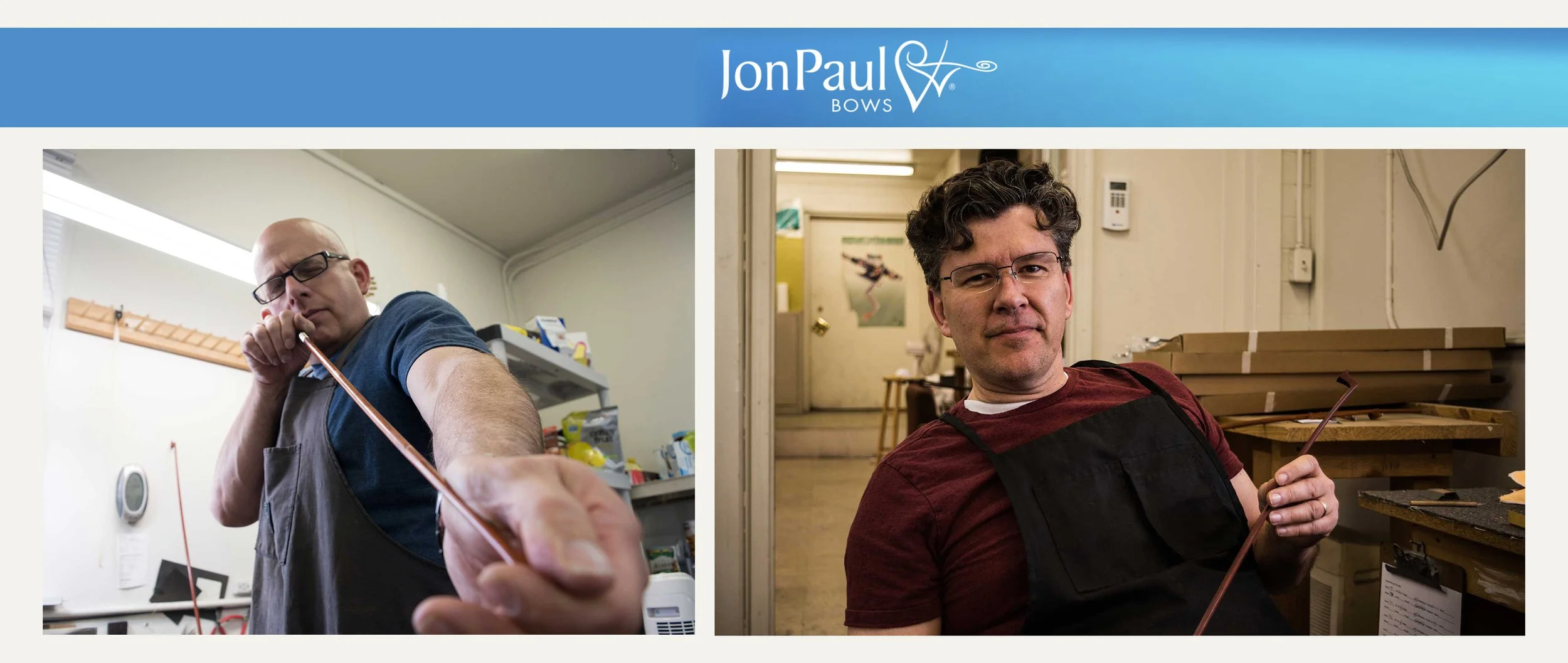
About JonPaul Bows
JonPaul Bows is a Salt Lake City–based bow-making company with deep roots in the string instrument world. Paul's family story begins in Germany, where his father — born in 1942 and raised by his great-grandfather, a player — went on to study violin making, immigrate to the United States, and establish a violin making school in Salt Lake City.
Paul came up in that world, beginning his training as a violinmaker. But it was while repairing bows that something shifted. A growing love for the craft led his father to connect him with a master bowmaker in France, where Paul completed an apprenticeship that would shape his entire approach to the work.
That European training is woven into everything JonPaul makes. Their bows are built around a single guiding principle: the player should feel the bow all the way to the tip, just as they would with fine wood. To achieve that, every stick is molded as one continuous, seamless piece — no break at the head, no glue joints dampening vibration. The silver tip is molded directly into the head for exceptional durability, and an internal sleeve mechanism keeps the button turning smoothly for years of playing.
Most distinctively, JonPaul's composite formula is not pure carbon fiber. A proprietary woven material is incorporated throughout the stick to slow vibrations and add tonal warmth and dimension — qualities that standard carbon fiber simply cannot replicate.
Their line includes domestically crafted bows as well as an accessible import composite line, all built with the same player-first philosophy that has made JonPaul a trusted name at Vermont Violins.
Experience the Jon Paul Array at Vermont Violins
Whether you are looking to test the organic tracking of the Chactega wood series, experience the smooth pull of the Avanti, or compare the "Firm vs. Flexible" setups of the master Carrera sticks, our newly trained staff is ready to assist you. Stop by our South Burlington showroom for a dedicated, guided trial.
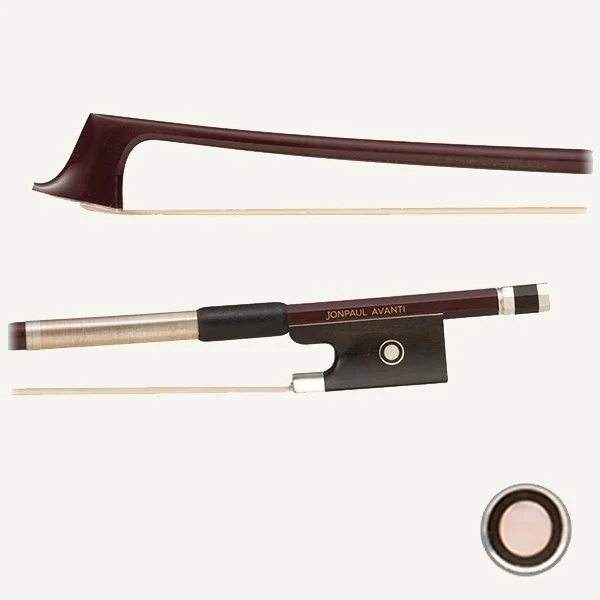

Agile. Alert. Amazing!
Agile, alert and amazing. Our least expensive silver-mounted bow, the Avanti feels, sounds, and plays like a bow costing thousands.


Built From What Players Actually Asked For
Most bows are designed in isolation — by makers working from tradition, intuition, or aesthetic preference. The JonPaul Corona was designed differently. JonPaul went directly to players and shop specialists, conducting systematic interviews across the country to ask a deceptively simple question: what do you actually want from an affordable bow?
The answer was consistent: weight, balance, strength, price, and finish — in that order. No compromise on any one criterion. The Corona was engineered to the letter of that brief, and it delivers on every count.
The Stick: Firm, Deep-Cambered, Versatile
The Corona features a firm carbon composite stick with deep camber — a combination that positions it equally well for classical and contemporary playing styles. Deep camber provides the responsive spring and articulation that sautillé and spiccato demand, while the firm backbone ensures bow speed, control, and a full-weighted draw across long, sustained legato passages.
This is not a stick that forces a stylistic choice. Whether your repertoire leans toward the clarity of Mozart, the drama of late Romantic works, or the rhythmic demands of contemporary chamber music, the Corona responds with equal facility.
Construction & Materials
The Corona's hand-colored wood-like finish is not a surface treatment — it permeates the entire stick for exceptional durability and visual consistency over years of use. There is no peeling, no fading, no finish degradation under the humidity variations that affect traditional pernambuco bows. This is a stick built to look as good after five years of daily use as it did on day one.
The bow is mounted with a nickel-silver ebony frog — a traditional configuration that offers excellent grip, aesthetic authenticity, and the tactile familiarity players trained on fine pernambuco bows expect. The alloy tip is designed in the Peccatte/Maline style — a head profile drawn from some of the most revered bow-making in history, characterized by a slightly longer, narrower tip plate that provides exceptional balance and a distinctive aesthetic.
The JonPaul Standard — Made in the USA
Every JonPaul bow is crafted in the United States — a distinction that matters, not just as a point of national pride but as a guarantee of consistent quality control, traceable materials, and manufacturing standards that are not subject to the inconsistencies of overseas production at this price point.
At Vermont Violins, we have handled hundreds of JonPaul bows across the full lineup. The Corona represents an extraordinary value proposition under $1k — a price point where the market is crowded with bows that look the part but fail under performance conditions. The Corona does not fail. It is the bow we recommend to advancing students stepping beyond their student outfit, intermediate players seeking a reliable secondary bow, and professionals looking for a robust everyday rehearsal stick.
Who Is the JonPaul Corona For?
The Corona is the answer for the advancing student who has outgrown their rental bow but isn't ready to commit to a $2,000+ instrument. It's equally compelling for the working musician who wants a reliable, durable everyday bow that frees their fine pernambuco stick for concerts only. And it's an intelligent choice for the parent equipping a serious young player — a bow that will not need replacing as technique develops.
If you've been playing on a factory-outfit bow and wondering why your tone feels capped, the Corona will reveal the difference immediately.
Available at Vermont Violins
Vermont Violins is a locally owned, community-rooted shop staffed by 20+ specialists committed to the musical life of Vermont and New Hampshire. We carry the full JonPaul line and can advise on bow selection across every price point and playing level. Home trials available by appointment.


Affordable luxury.
JonPaul developed the Muse in response to the many requests for a bow that plays similar to the Carrera, but at a lower retail price. Hand colored and finished like the Carrera, we included everything we could to resemble its older brother. The stick is slightly stronger, and feels incredible. It is mounted beautifully in sterling silver with the JonPaul signature "hand finished" texture.


Played and endorsed by symphony, stage and studio professionals around the world.
Patterned after an exquisite French Pajeot bow, the Carrera is quick, agile and feels like an extension of your own arm. Built into the design of each Carrera is perfect balance, weight, and flexibility, which not only enhances your techniques as a player, but creates warm, rich and powerful tones. The distinctive appearance features a textured, “varnished” finish with elegant red-brown hues. Mounted in sterling silver with a fan-tail button, the Carrera is not only beautiful, it will match any demands you place on it. Frog and button available in ebony, white horn or black horn.


The Summit. No Qualifier Needed.
Vetta — Italian for summit or pinnacle. It is not a name chosen casually. It is a declaration of intent: this is JonPaul's finest bow, the instrument that represents everything the maker has learned across decades of crafting bows for professional players in the United States.
The Vetta sits at the apex of the JonPaul lineup — and at a price point where it competes directly with certified antique pernambuco bows and the finest contemporary workshop bows from European makers. It holds its ground in that company, unambiguously, on every criterion that matters: balance, weight, flexibility, tonal character, and finish quality.
Inspired by an Immaculate Peccatte
The Vetta was not designed from scratch — it was modeled from an immaculate Dominique Peccatte bow in JonPaul's own collection. Peccatte (1810–1874) is considered by many bow historians and professional players to represent the absolute pinnacle of French bow-making — a maker whose instruments are now museum pieces and auction rarities trading at $50,000 and beyond.
What JonPaul accomplished with the Vetta is not imitation. It is translation: taking the balance geometry, the camber profile, the weight distribution, and the playing feel that defines a great Peccatte, and rendering it in a material — carbon composite — that is immune to the fragility, humidity sensitivity, and irreplaceable scarcity of 19th-century pernambuco.
The result is a bow that plays like a legendary Peccatte — warm, rich, and powerful — available to the serious player today, without the six-figure acquisition cost or the anxiety of owning an irreplaceable antique.
Playing Character: Warm, Rich, Powerful
The Vetta achieves something genuinely rare at any price point: a fine French feel with the tonal weight and authority of the greatest historical bows. The flexibility is supple without being soft — the stick loads and releases energy with precision, rewarding advanced technique with immediate, nuanced response across all bow speeds and pressure gradients.
Tone production with the Vetta is characterized by:
Warmth — a full-bodied, singing quality in sustained passages
Richness — complex harmonic content that amplifies the natural voice of the instrument
Power — projection that carries into large halls without forcing or pressure
This is not a bow for the player still developing bow arm freedom. This is a bow for the player who has the technique to reveal what a great bow can do — and who deserves an instrument that rises to meet that technique.
Craftsmanship & Materials
The Vetta's varnished finish is a hallmark of distinction within the JonPaul line. Elegantly textured, it is both visually striking and unique — a finish that evokes the finest traditional French bows while being entirely original in its execution.
Three frog options are available to personalize the bow for your collection:
Ebony — classic, traditional, and beautifully weighted
White Horn — ivory-like warmth with refined elegance
Black Horn — dramatic, deep, and refined
All frogs are mounted with 14-karat rose gold — not gold-plated, not gold-tone. Rose gold. The warm hue of the rose gold, paired with the rich red-brown tones of the stick, creates a visual coherence that is immediately recognizable as an instrument of the highest tier.
Who Is the JonPaul Vetta For?
The Vetta is for the professional violinist who wants a concert-quality bow without the fragility or cost of a museum-grade antique. For the advanced student preparing for conservatory auditions who needs a bow that will not limit their ceiling. For the collector who appreciates that a great modern bow — properly maintained — will outlast and outperform antiques of comparable cost. And for the player who simply wants the best JonPaul bow ever made.
Try Before You Buy — Home Trial Available - CLICK HERE
*This article was released by Vermont Violins on June 10, 2026. For media inquiries, product information access, or scheduling availability regarding our imported instrument collections, contact us directly at info@vermontviolins.com* or text us at 802 648 6371