
The Soulful Centerpiece: How a Pedal Harp Inspires Modern Interior Design & Decoration
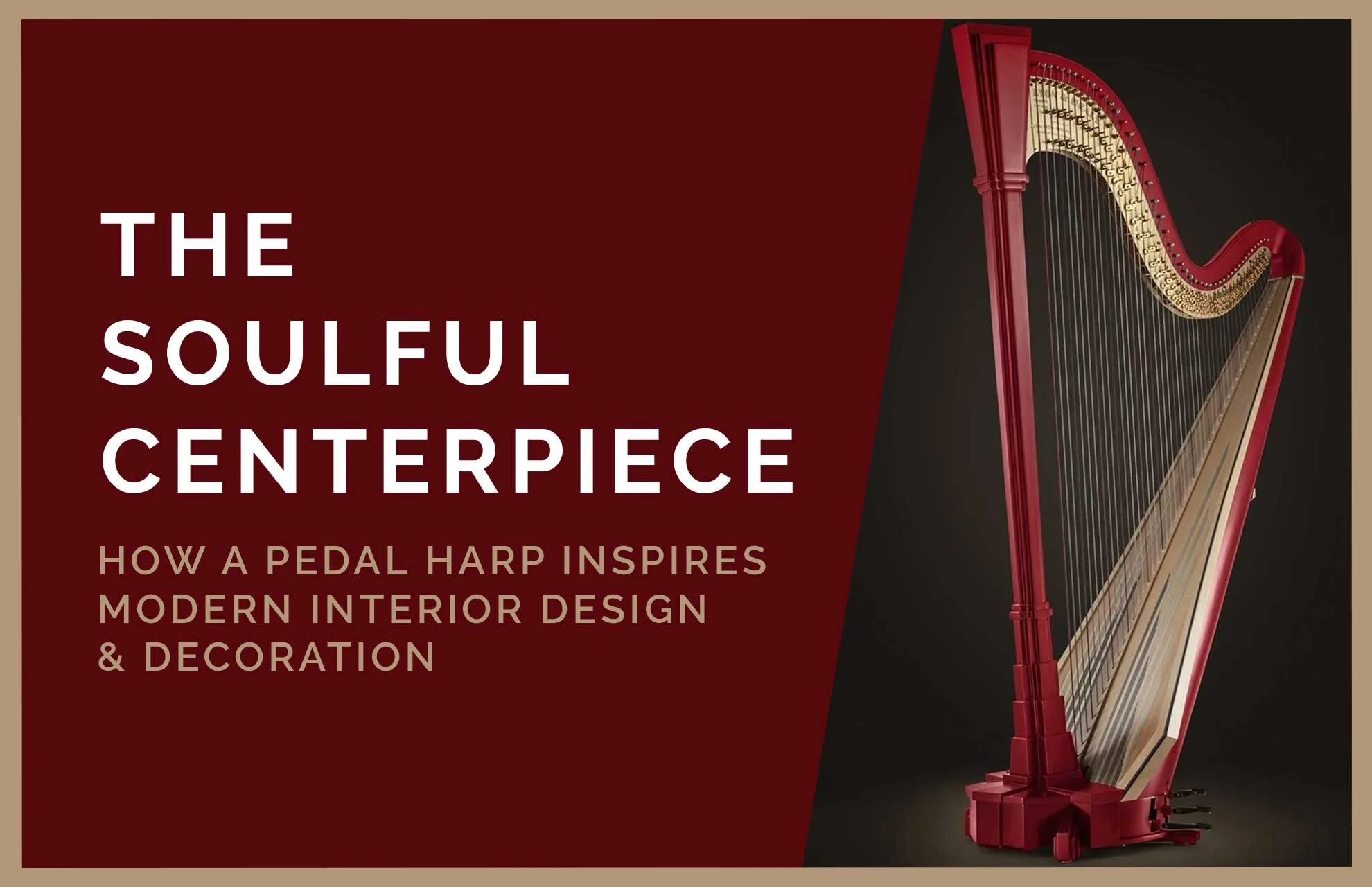
The warmth of a home, the beautiful sound of a harp, and the feeling of true luxury that comes from surrounding yourself with things you love. It's not about price tags; it's about the soul of a space.
Deep down, we're all looking for a response, a connection. Our lives are a constant exchange of signals, whether we're the life of the party or prefer our own company. What we truly crave is to be heard, to feel cared for, to know someone is listening. Music inherently understands this. It’s an incredible companion that guides us through every feeling, offering creativity and understanding. Art, too, has been a source of profound human connection for as long as we've existed. It’s simply part of who we are.
The Pursuit of Home and True Value
We’re all on a journey to find that special feeling. That sense of warmth and belonging we call home. It's so much more than just a house; it's a sanctuary filled with our memories and stories, decorated with things that speak to our hearts.
True luxury isn't about how much something costs. It's about value. It's about surrounding ourselves with objects that have stories—things that really mean something to us. In today's fast-paced world, it's easy to get distracted by shiny new things and forget what truly matters. But the deepest kind of wealth isn't a quick flash; it's something layered and rich with meaning. It's the beauty that lasts.
Imagine the harp, not solely for its melodic capabilities, but as an object of inherent beauty and profound stillness. Crafted from the most exquisite materials—rich, resonant woods that speak of forests and time, gleaming metals that catch and refract light, and intricate details that are the hallmark of artisanal mastery—a harp possesses an innate ability to transform an environment. Its graceful lines and imposing yet elegant form can instantly elevate a room, shifting it from merely decorated to truly inspired. It stands as a testament to human ingenuity and aesthetic pursuit, a sculptural presence that commands attention through its sheer artistry and the promise of untold stories.
Beyond its visual grandeur, the harp offers a subtle, yet deeply impactful, sensory experience. Picture a moment: one moves through a sun-drenched living room, and perhaps, almost subconsciously, fingers lightly brush against the taut strings. A gentle, almost imperceptible hum might resonate through the air—a whisper of sound that seems to carry positive vibrations, a quietude that washes over the observer. This experience is not about playing a grand concerto; rather, it is about the inherent energy, the untouched potential, the silent symphony that emanates from its very presence. The harp, in this context, transcends the realm of mere furniture; it becomes an experiential element, a source of subtle sensory delight that profoundly enhances the atmosphere of a home, inviting a moment of calm reflection.
For those who appreciate the deeper nuances of design, there is an understanding that even a single object holds immense narrative potential. It is not simply about filling a void; it is about enriching the story a space tells, allowing each piece to contribute its own chapter. The materials, naturally, are paramount—the rich patina of aged wood, the luminous gleam of polished gold, the intricate detailing that speaks of countless hours of dedicated craftsmanship. Yet, beyond the tangible, there exists an intangible quality: the resonance of history, the whisper of forgotten melodies, and the boundless potential for new ones. A harp, in its quiet dignity, carries this weight of time and possibility, inviting contemplation and connection.
Going Back In Time
The harp isn't just some instrument; it's practically alive with history! It really shows how creative people have been for thousands of years. We've actually found signs of harp-like instruments from way back, like 3000 BCE, in places like Mesopotamia and Egypt. Back then, they were pretty simple – just some wood and animal gut – but they were a huge deal for culture and even spirituality. The ancient Egyptians even thought their beautiful sounds could connect them to the heavens. Pretty cool, right?
As civilizations grew, the harp grew with them. Take the Celtic harp in Ireland and Scotland, for example. It's totally wrapped up in their folk tales and the lives of the nobility. These smaller harps were super important to the bards, those poet-musicians who basically kept history alive through their songs.
Then came the Renaissance and Baroque periods, and with them, awesome improvements like the hook harp. That really opened up new musical doors. The harp started showing up in fancy salons and orchestras, adding this really elegant touch to everything.
But the true game-changer happened in the 18th and 19th centuries, all thanks to a guy named Sébastien Érard. His inventions in 1810 and 1811 – these amazing pedal mechanisms – completely changed the harp. All of a sudden, harpists could change notes super fast, making the harp a full-blown orchestral instrument that could play really complex classical music.
The pedal harp became a star in orchestras and as a solo instrument. Its grand size, often beautifully carved and gilded, made it a visual masterpiece too. Composers like Berlioz and Debussy just loved its unique sound.
Even now, harps are still evolving, from the simple folk harp to the super versatile lever harp. Each one has its own story, and the materials? They're always chosen with such care – beautiful woods like maple and cherry, intricate carvings – all shaped to create an instrument that looks just as stunning as it sounds. A well-made harp isn't just put together; it's a true work of art that really resonates with your soul.
Redefining the Centerpiece: The Harp in Interior Design
When we think about the heart of a room—whether it’s a cozy study, a welcoming living room, or a stylish gallery—our minds often picture familiar things. A grand piano, for example, is usually seen as the star, symbolizing culture and music. But what if we looked at something different, something just as beautiful and meaningful? The harp is one such idea. Not just as an instrument that makes music, but as a quiet work of art that can completely change how a room feels.
So, whether you’re an interior designer or someone simply making their home feel more personal, the harp offers a fresh way to think about what belongs at the center of a room. It’s not just decoration; it’s about creating a space that feels peaceful, meaningful, and unique. A harp lets a room breathe with a soul all its own.
For interior decorators, considering a harp involves more than just its aesthetic appeal; it's about understanding how this unique instrument can truly elevate a space.
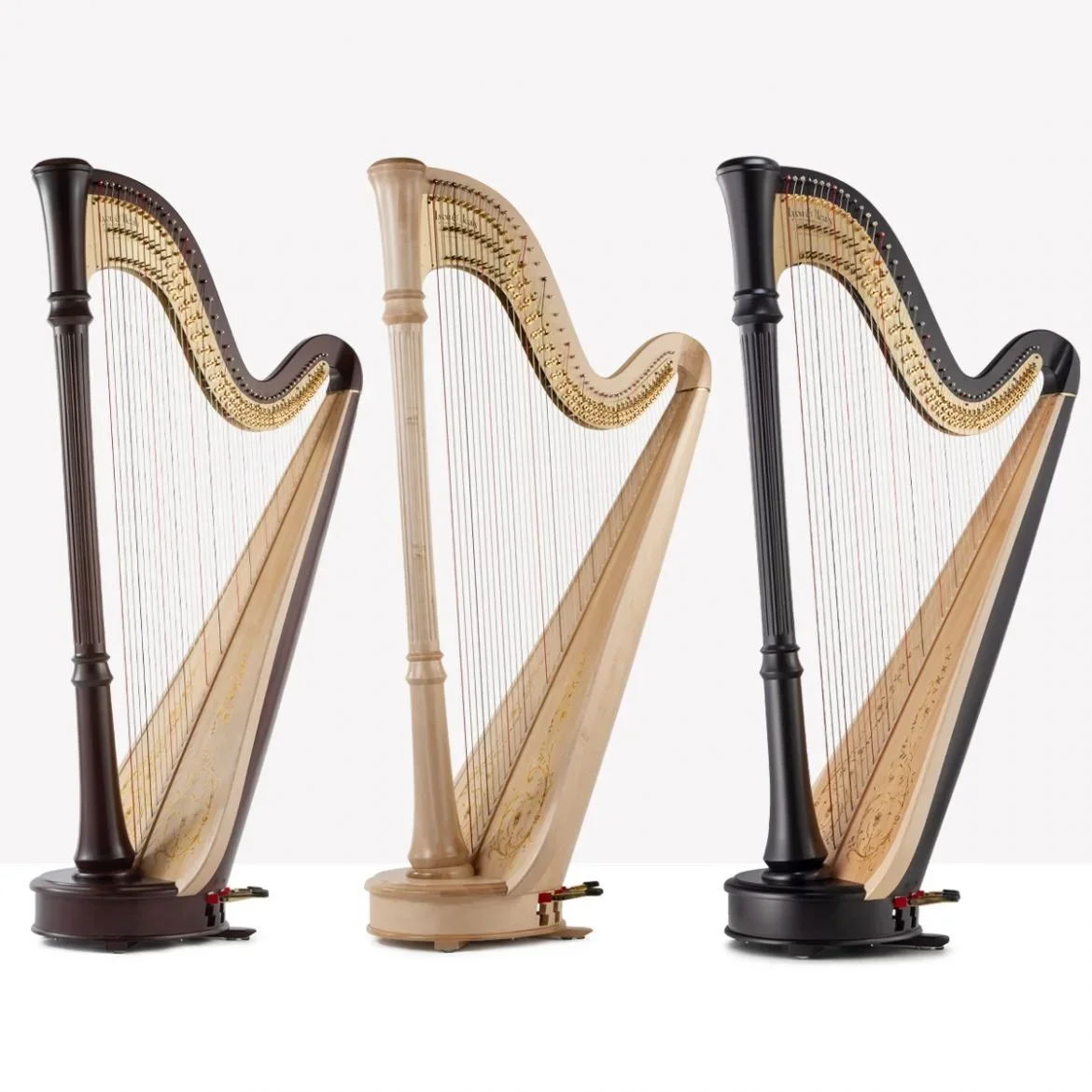
Diverse Forms for Diverse Spaces: Harps come in various sizes and styles. From the majestic concert grand pedal harp, ideal for large, formal living rooms or grand entryways, to the more compact lever harp or folk harp, which can beautifully complement smaller studies, intimate reading nooks, or even a child's bedroom. Understanding these variations allows for precise integration into different room scales and functions.
Strategic Placement: The harp's placement is key. Consider areas with good natural light to highlight its sculptural form and intricate details. While harps are musical instruments, their acoustic impact in a decorative setting is usually minimal unless actively played. However, ensuring it doesn't obstruct traffic flow or overwhelm a space is essential. A corner, a niche, or a prominent wall can serve as an ideal backdrop.
Harmonizing with Aesthetics: The harp's versatile design allows it to integrate seamlessly into various interior styles:
Traditional/Classical: A richly carved, gilded pedal harp enhances the grandeur of classical or opulent settings.
Modern/Minimalist: A harp with clean lines and simpler finishes can offer a striking organic contrast to contemporary, minimalist designs, acting as a focal point without clutter.
Bohemian/Eclectic: Smaller, more rustic folk harps can add a touch of artistic charm and warmth to eclectic or bohemian interiors.
Maintenance & Care: While beautiful, harps do require some basic care (e.g., dusting, stable humidity). Informing clients about these minimal requirements ensures the instrument remains a cherished and well-preserved centerpiece.
The harp is worth considering for anyone interested in interior design, not just because of its striking appearance, but also for the special atmosphere it brings. With its elegant curves and fine materials, the harp stands out like a piece of art and adds something unique to any room. Beyond how it looks, the harp has a rich musical background, and even its quiet presence can make a space feel calm and welcoming. Every harp also has a story, full of history, culture, and the careful work of those who crafted it, adding another layer of meaning to your décor. What’s more, a harp can fit beautifully in all kinds of spaces, whether your style is modern and simple or more traditional and detailed. Choosing a harp is about more than just decorating—it’s about adding beauty, meaning, and a sense of quiet luxury to your home. If you’re curious about how a harp could work in your space, or want to know more about these wonderful instruments, just ask—there’s always more to discover.
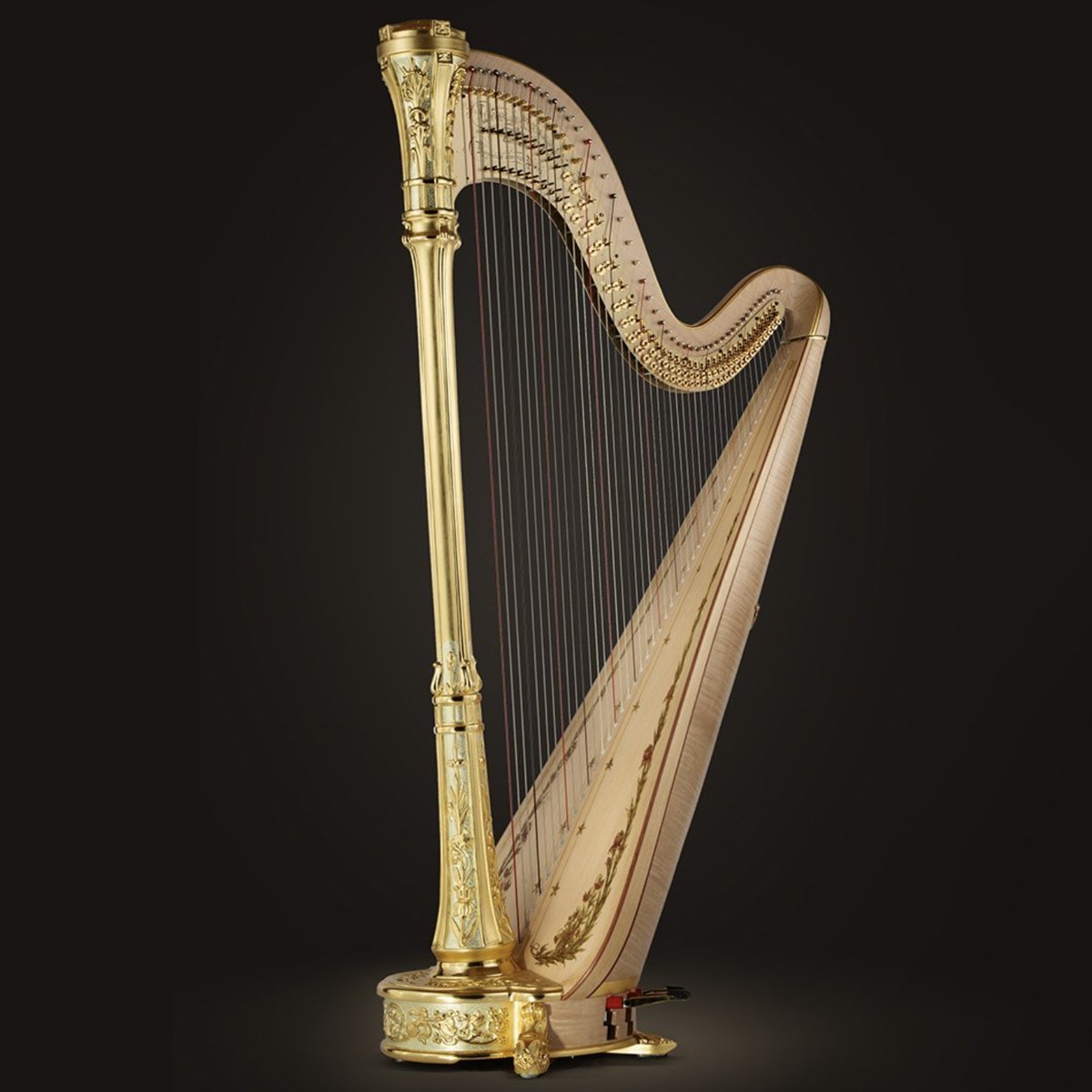
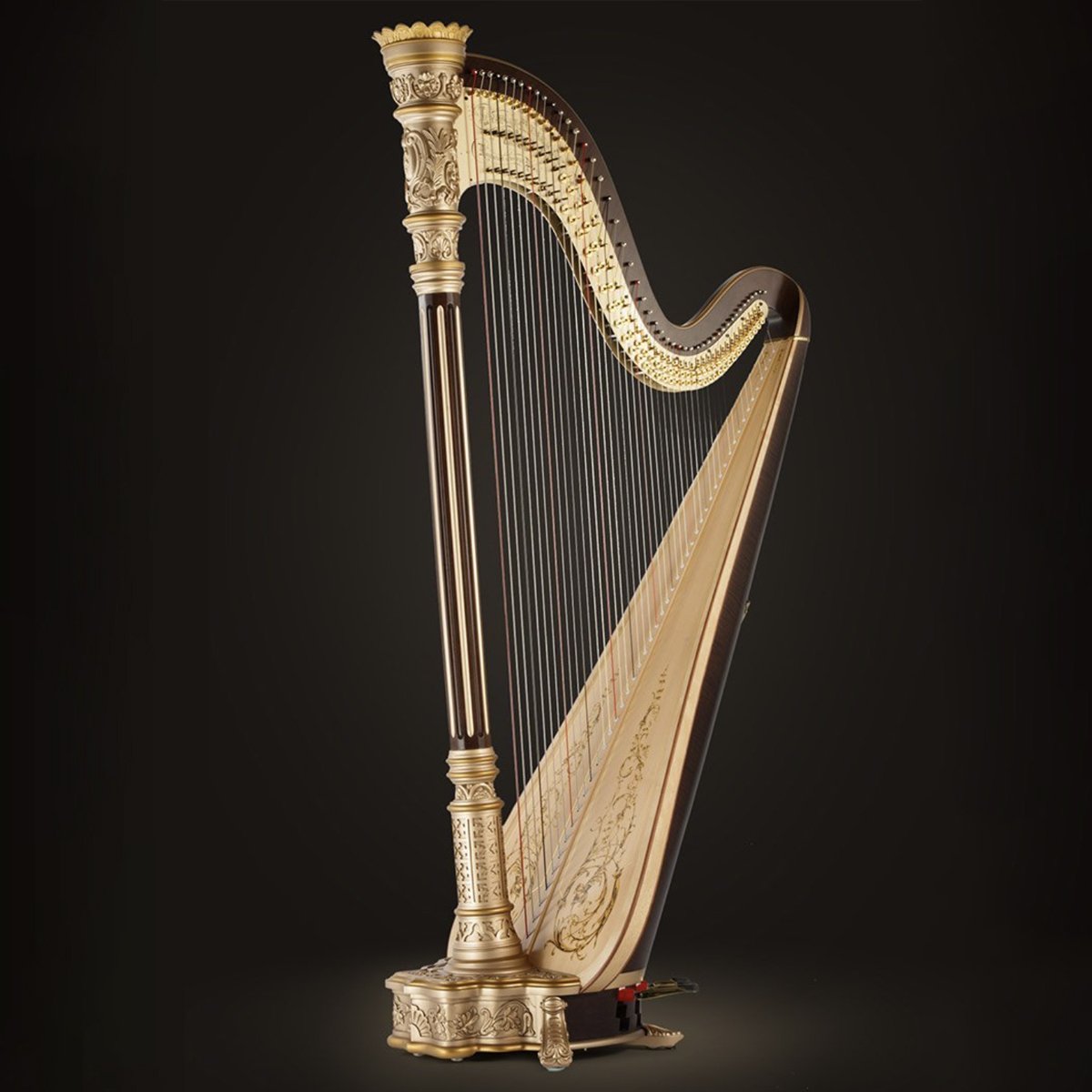
A romantic harp designed by Lyon & Healy in 1919, the Style 11 is characterized by a classic Art Nouveau motif of fluid vertical lines, flowers and vine tendrils which are hand-carved into the Hard Maple column, base and feet. The harp is hand-gilded with 23+ karat gold leaf and burnished to highlight the intricacies of the hand-carved wood. Soft floral decoration accents the extended soundboard which also features a double Rosewood inlay along the edges.
For the collector, concert professional, or conservatory student seeking a lifetime heirloom, the Lyon & Healy Style 11 Gold is one of the finest, most prestigious musical instruments on earth. Hand-built in Chicago by the world’s undisputed premier pedal harp maker, this 47-string, high-tension concert grand pedal harp commands immense sonic authority and represents an investment-grade asset to pass down through generations.
Gallery-Grade Craftsmanship & Unrivaled Mechanics
23-Karat Hand-Applied Gold Leafing: The defining signature of the Style 11 Gold is the breathtaking, hand-applied 23-karat gold leafing that cascades up and down the pillar, crown, and feet. This is master artisan work requiring years of specialized training to execute.
Hand-Carved Art Nouveau Motif: The base, column, and crown are intricately hand-carved with a fluid, organic Art Nouveau pattern featuring winding vines, delicate tendrils, and blossoming flowers.
Exquisite Hand-Painted Soundboard: Complementing the three-dimensional carvings, the premium spruce soundboard features a soft, multi-colored, hand-painted floral decoration that perfectly repeats the flowing leaf and tendril motif of the pillar.
Massive, Acoustic Projection: Standing at a commanding 75 inches, the premium spruce soundboard is optimized for maximum resonance. It projects a massive, complex, and luxurious wall of sound capable of filling the world's finest symphonic halls.
Unparalleled Investment Value: Merging museum-quality visual design with elite mechanical performance, this natural-finish masterpiece is built to anchor a professional career, showcase the finest room in your home, and hold its value for decades to come.
The Style 23 Bronze highlights the embellished floral carving at the crown, top of the column, base and feet with rich, reflective bronze and walnut finish. Sweeping organic decoration accents the extended Sitka Spruce soundboard, which also features a double Rosewood inlay along the edges.
The Heirloom Pedal Harp That Commands Every Room It Enters
There are instruments you play. And then there are instruments you live with — masterworks that enrich every space they occupy, acoustically and aesthetically, for a lifetime and beyond. The Lyon & Healy Style 23 Bronze is unambiguously the latter.
Of the entire professional pedal harp range, the Style 23 Bronze is the instrument our harp specialist Oren at Vermont Violins return to most readily when a customer asks, "If you had to choose one?" It occupies a singular position in the Lyon & Healy lineup: more expressive than a natural-finish instrument, more intimate than the fully gilded models, and — in the judgment of many seasoned harpists — more visually striking than either.
The Design: Where Walnut Meets Bronze
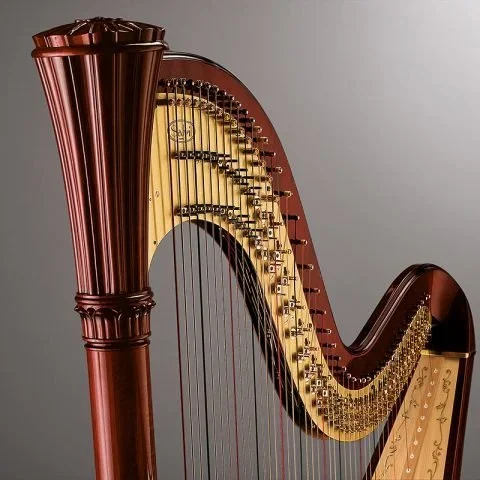
The Style 23 Bronze is built on a solid walnut frame — a rich, dark chocolate wood that carries natural figuring and warmth in its grain. Against this, Lyon & Healy's craftspeople apply bronze leaf accents at the crown, at the capital (top of the column), and across the base and feet. The interplay between the organic depth of the walnut and the warm, reflective luminosity of the bronze is not merely decorative — it is genuinely architectural.
The column is deeply fluted — a classical motif executed with precision, carved and finished by hand in Lyon & Healy's Chicago workshop. Full carved ornamentation appears at the crown and base. The extended Sitka spruce soundboard features embellished floral carving at key decorative points, with a double rosewood inlay running along its edges — a refined border detail that underscores the harp's commitment to visual coherence from every angle.
This is not gilded. That distinction is important: the Style 23 Bronze sits between Lyon & Healy's natural-wood professional models and the fully gilded instruments at the very top of the range. It is, in the truest sense, a harp for players who want the luxury aesthetic without the gilded formality — warmer, richer, and more at home in a wide range of settings, from a professional concert stage to a well-appointed private residence.
The Sound: 47 Strings of Orchestral Authority
The Lyon & Healy Style 23 Bronze is a full professional pedal harp — 47 strings spanning the complete concert range, with high-tension stringing as standard across the professional line.
The soundboard is crafted from Pacific Northwest Sitka spruce — the same tonewoods chosen by luthiers for the finest acoustic instruments in the world. Sitka spruce offers an exceptional strength-to-weight ratio, wide dynamic range, and a tonal character that projects with authority in large concert halls while remaining nuanced and expressive in chamber settings. The result is a sound that is, in the words of our specialists, "luscious" — room-filling in the most beautiful sense, with a sustain and harmonic richness that defines what a professional pedal harp should sound like.
At 74 inches tall with a soundboard width of approximately 25 inches, this is a grand concert instrument in every dimension. It will not disappear into a room. It will define it.
Made in Chicago — A Legacy of American Craftsmanship
Lyon & Healy has been manufacturing professional pedal harps in Chicago, Illinois since 1864 — a continuous tradition of American instrument-making that spans more than 160 years. Every Style 23 Bronze is built by hand in that same Chicago workshop, by craftspeople who have dedicated their careers to the art of harp construction.
This is not a production instrument assembled from off-the-shelf components. It is a hand-finished, individually inspected work of functional art — available in a single, definitive color arrangement: walnut and bronze. There are no inferior variants or alternative configurations. The Style 23 Bronze is a singular vision, realized without compromise.
An Investment Built to Outlast Its First Owner
Professional pedal harps of this caliber are routinely passed down across generations. We have seen Lyon & Healy instruments from the mid-20th century — properly maintained — perform at a level indistinguishable from new. The Style 23 Bronze is built to that same standard.
Customers at Vermont Violins purchase this instrument for two reasons that are not mutually exclusive: because they need a professional harp of the highest order, and because they understand that at $53,900, they are acquiring something that will appreciate — or at minimum hold — its value in a way that few consumer purchases ever do.
It is, as Oren describes it, an absolute investment. One that pays musical, aesthetic, and financial dividends for decades.
Who Is the Style 23 Bronze For?
This instrument is for the professional orchestral harpist seeking a lifelong concert instrument. For the advanced student stepping into their first professional pedal harp. For the discerning collector who understands that the finest things are worth acquiring once, properly. And for anyone who has ever walked into a room where a Lyon & Healy pedal harp was playing — and felt the air change.
If you are looking for the ultimate harp — a concert-grade, artisan-crafted, heirloom-quality pedal instrument that will define your musical life and your living space for generations — the Lyon & Healy Style 23 Bronze is the best choice.