From Seven to Nineteen: A Mother-Daughter Journey Through Music, Growth, and a Viola named “Willow”
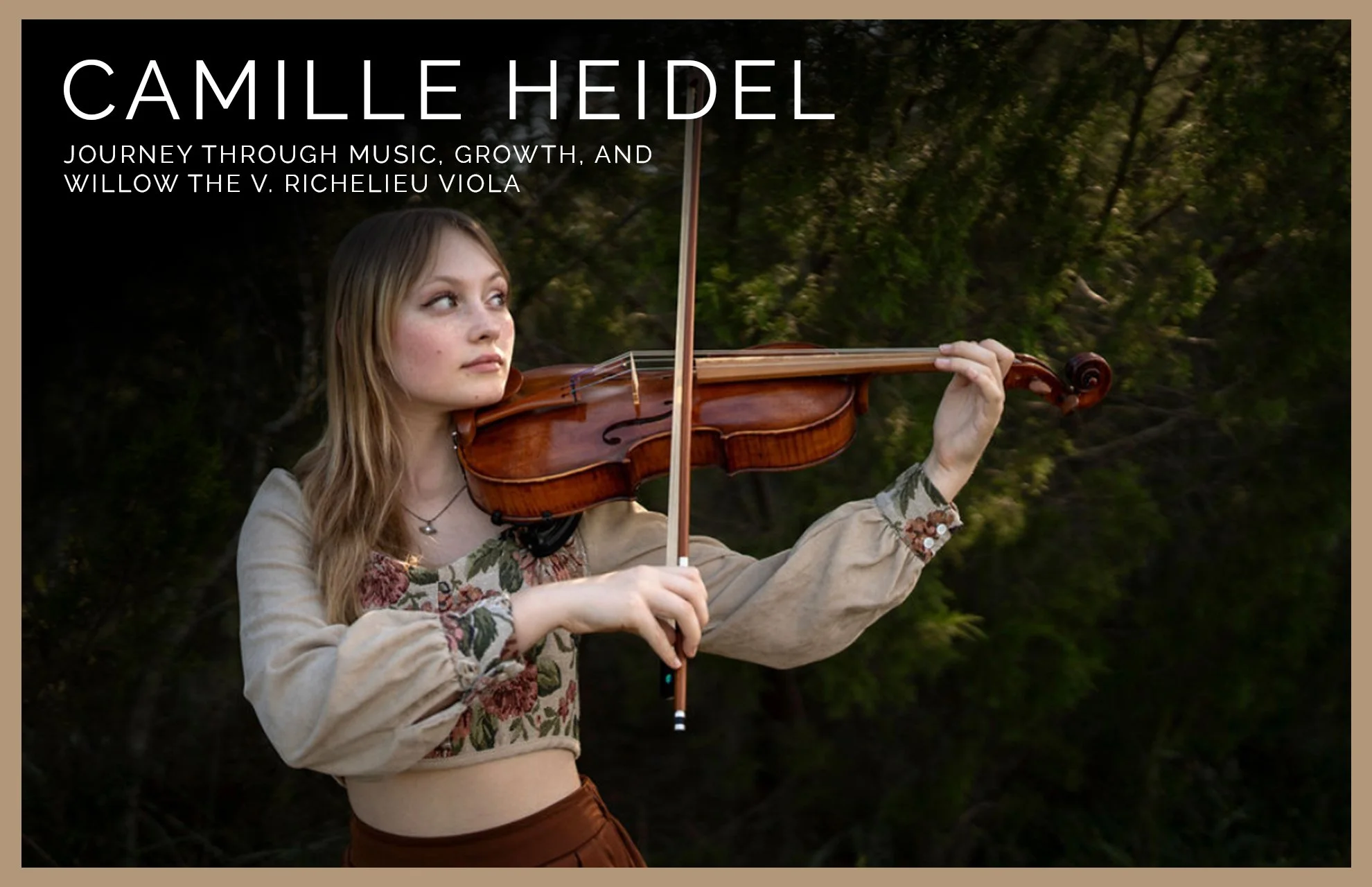
When seven-year-old Camille expressed interest in learning a string instrument, her mother Ginger faced a decision familiar to many parents: how do you support a child's musical dreams— how to choose and invest in an instrument they might outgrow in two years?
Twelve years later, Camille is in her sophomore year at the Georgia Institute of Technology in Atlanta, pursuing a Biology major with a minor in Korean. Her viola—a V. Richelieu she's named Willow—travels with her between home and college, providing solace during challenging coursework and keeping music alive in her daily life. Her journey from beginner to accomplished musician offers insights for parents navigating the world of music education and for anyone wondering whether quality and commitment truly matter for musicians.
A Seven-Year-Old's Choice: Why Viola?
Camille grew up surrounded by music and musicians—family and friends who played instruments, creating an environment where music felt natural and inviting. When she expressed interest in joining them, she made an intentional choice.
I grew up with a bunch of friends and family who were involved in music and playing instruments, and a lot of them played violin. I expressed interest in wanting to play an instrument, and we decided on viola because it was different than what everybody else was doing. I wanted to kind of do my own thing separate from what my friends were doing.
That independent spirit—choosing the viola, the often-overlooked middle voice of the string family—would define Camille's musical journey. At seven years old, she began renting her first fractional viola, and a decade-long partnership with music began.
A Parent's Dilemma: Investing in the Unknown
For Ginger, finding the right rental program was crucial. Family friends had already discovered Vermont Violins and recommended the program, but it was the structure that ultimately won her over.
What really sold me on the rental program was the fact that you would build equity toward buying an instrument throughout the course of her time in the rental program. Some of the other programs we looked at here in Savannah had two-year contracts. You would be building equity for two years, but at the end of two years, you would need to buy the instrument. And I knew that at age seven, we didn't want to buy the instrument that she would be playing at age nine, because that would be different from the instrument that she would be playing at age eleven.
The ability to build equity continuously—from age seven all the way to seventeen—gave the family the flexibility to grow with Camille's development without losing their investment. But there was another consideration: renting from Vermont while living in Georgia.
I was at first a little bit unsure how it would work, renting from a shop in Vermont when we live in Georgia, but they assured me that they would ship the instruments and if there were any issues, we could ship it back. We never had a problem with any of that. They were always willing to ship the new rental instrument, even before she had sent the old one back, so that there was no gap where she didn't have an instrument. Communication was always super easy.
That attention to detail—ensuring a young musician never went without her instrument—meant everything when Camille's musical journey began taking off.
The Journey Begins: Atlantic Youth Orchestra and Beyond
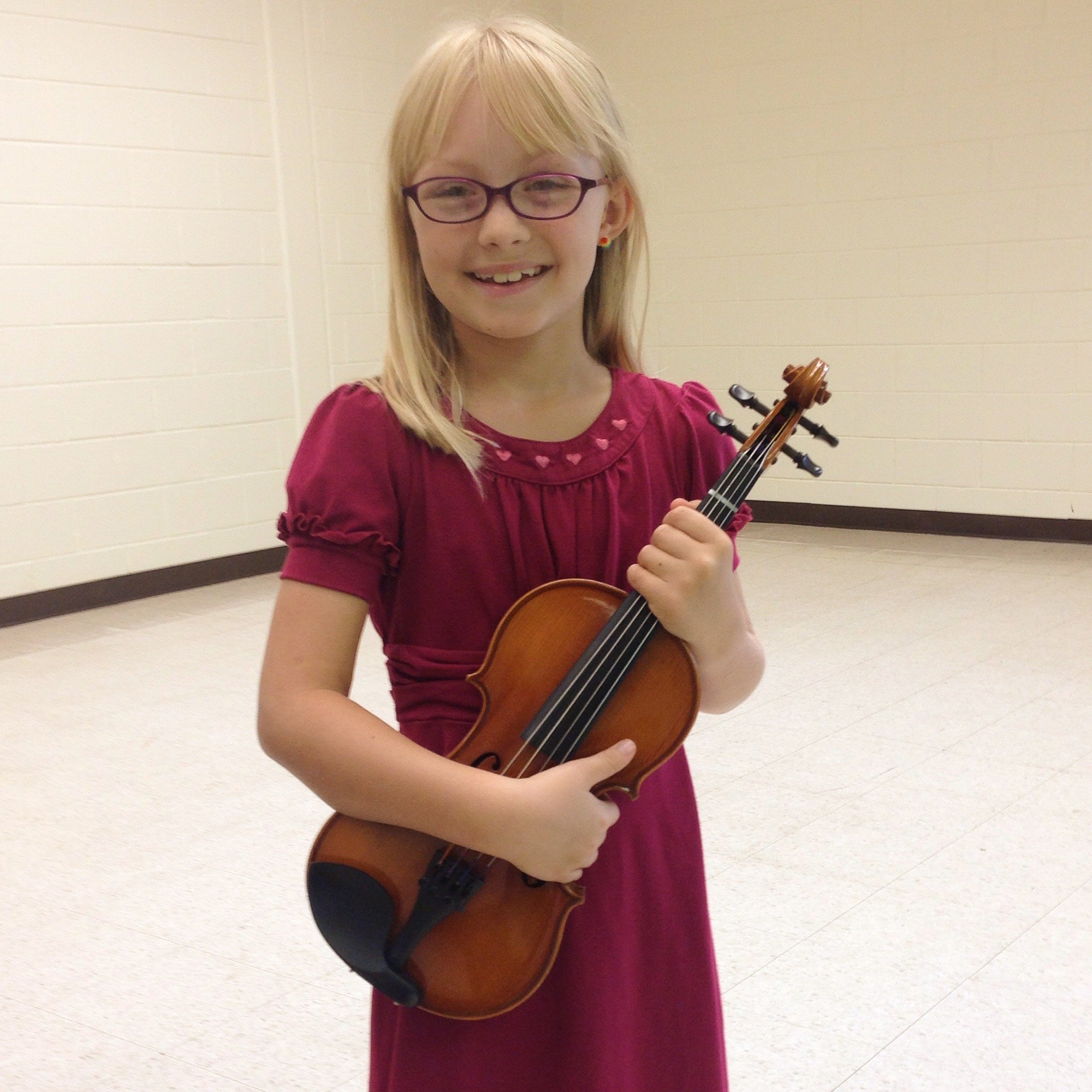
Auditioning for the Atlantic Youth Orchestra at age 8
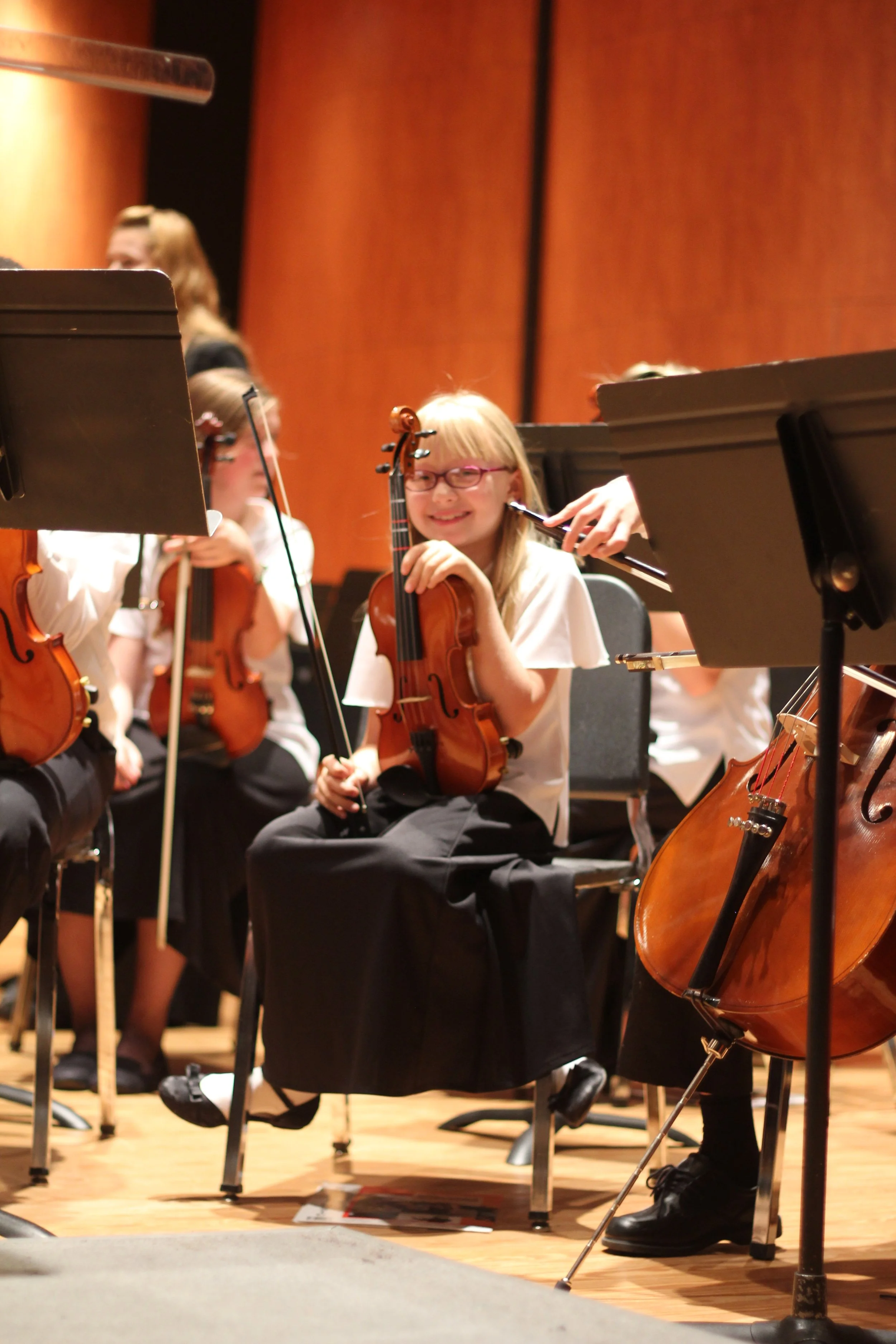
Atlantic Youth Orchestra concert
Just one year after starting the viola, eight-year-old Camille auditioned for and joined the Atlantic Youth Orchestra program, Savannah's city-wide orchestra program. It was the first of many milestones that would mark her musical development over the next decade.
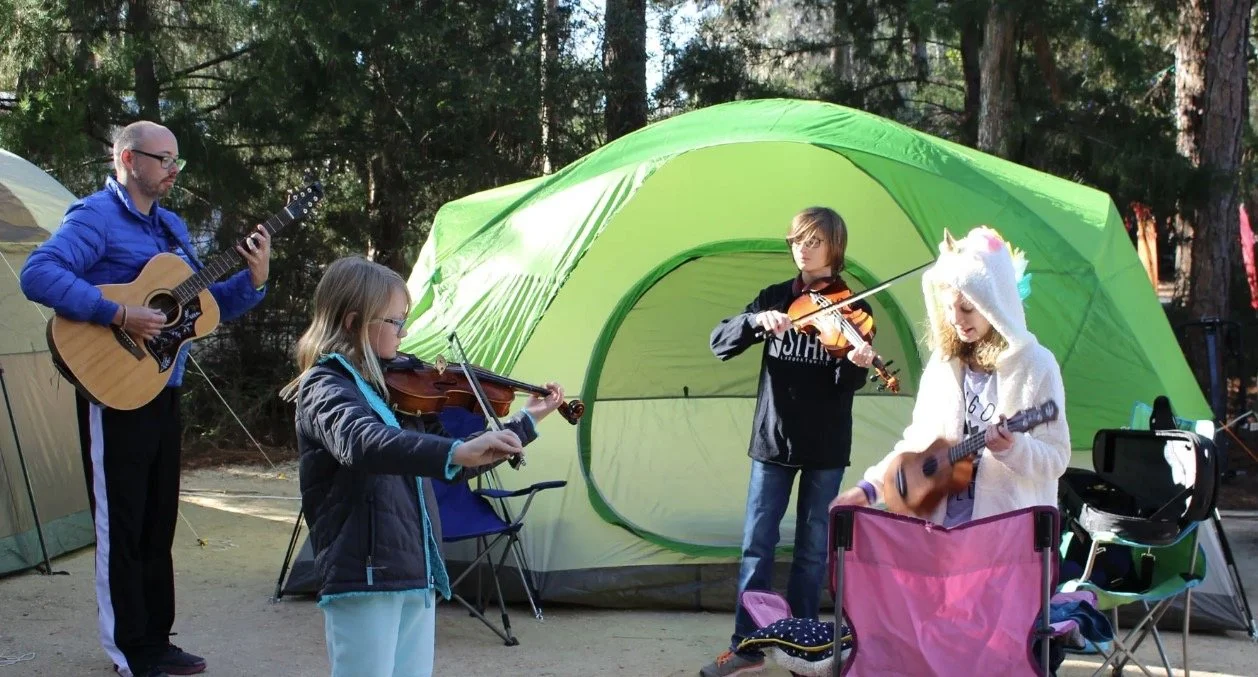
As she progressed through the youth orchestra program, her violas became travel companions. When the family spent a year living in Costa Rica in 2015-2016, her viola came along, providing continuity and comfort in a new place. She played on camping trips, jamming with friends and family under the stars. Music wasn't just something she did—it was woven into the fabric of her life.
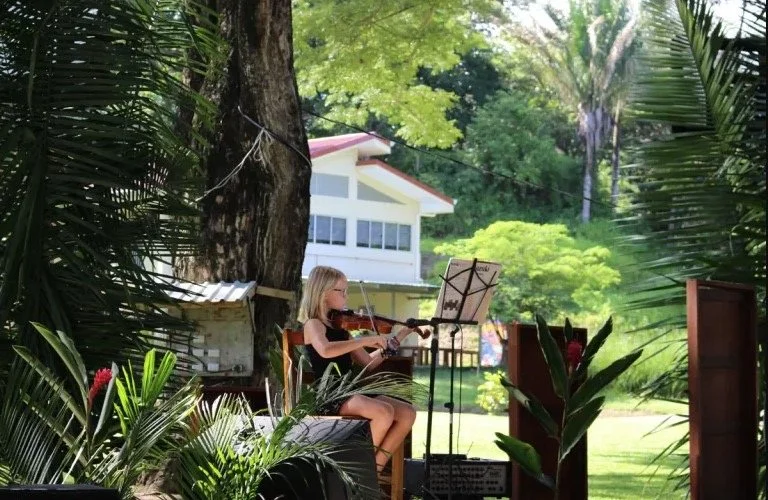
Concert at school in Costa Rica

Concert at school in Costa Rica
Understanding Quality: Why the Instrument Matters
As a parent, Ginger learned an important lesson about the relationship between instrument quality and student motivation—one she wishes more parents understood from the start.
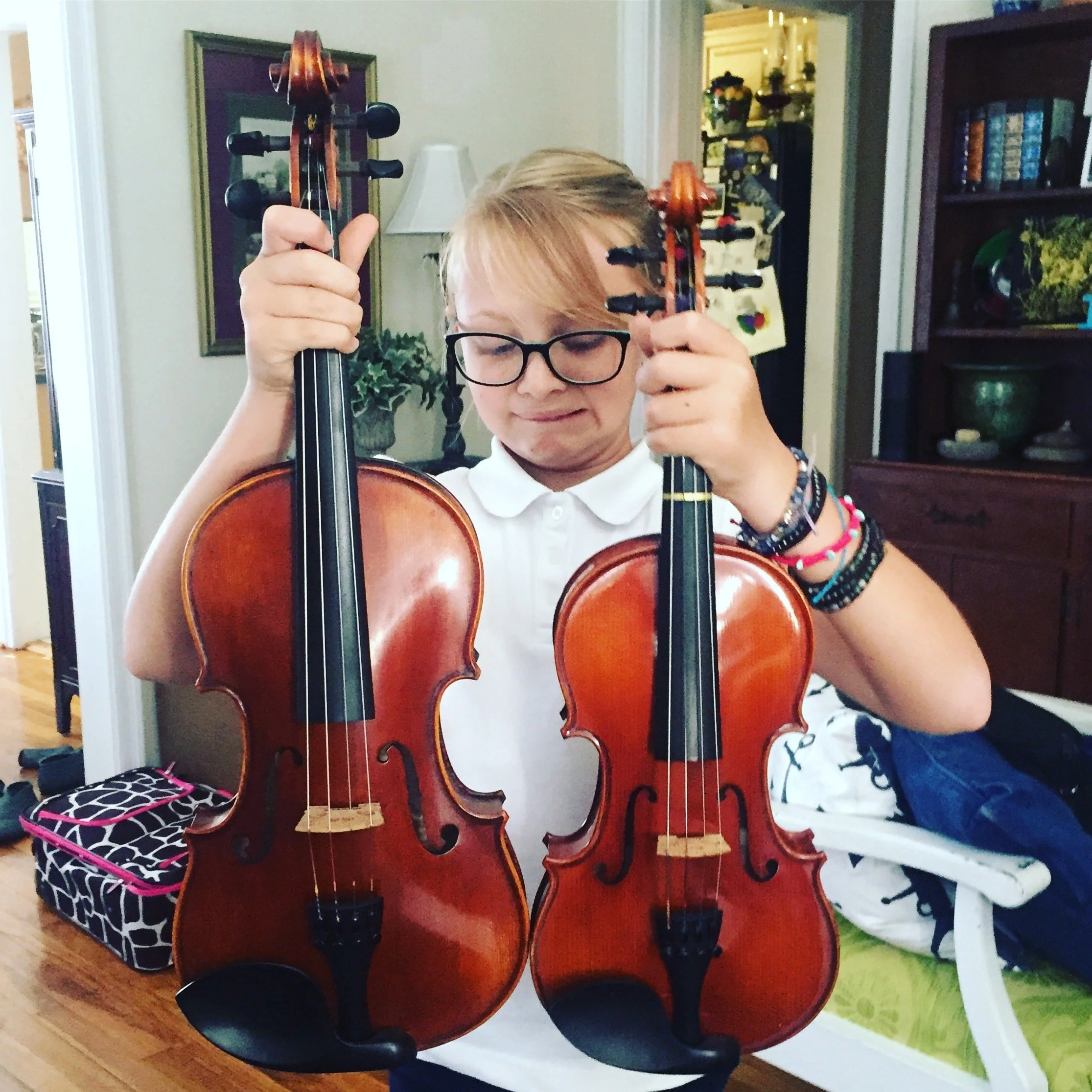
I think it is important, when possible, to start with a decent quality instrument, because when you're first learning to play, it's not going to sound great. I think you're going to have more success in the beginning if you're playing an instrument that is more forgiving and that's going to sound better. If you start out with a very low quality instrument, it may be even longer before you feel like you're having success and you're making good sound.
Camille experienced this evolution firsthand as she moved through different quality levels in the rental program.
When we started, we started with not a super high-quality instrument because we weren't sure how long I was going to stick with it. But as we progressed through the years, it would get higher and higher quality, and I could definitely tell that there was a difference in the sound. I remember the first time I got a higher quality instrument, I was really excited to play it because it just sounded so much richer.
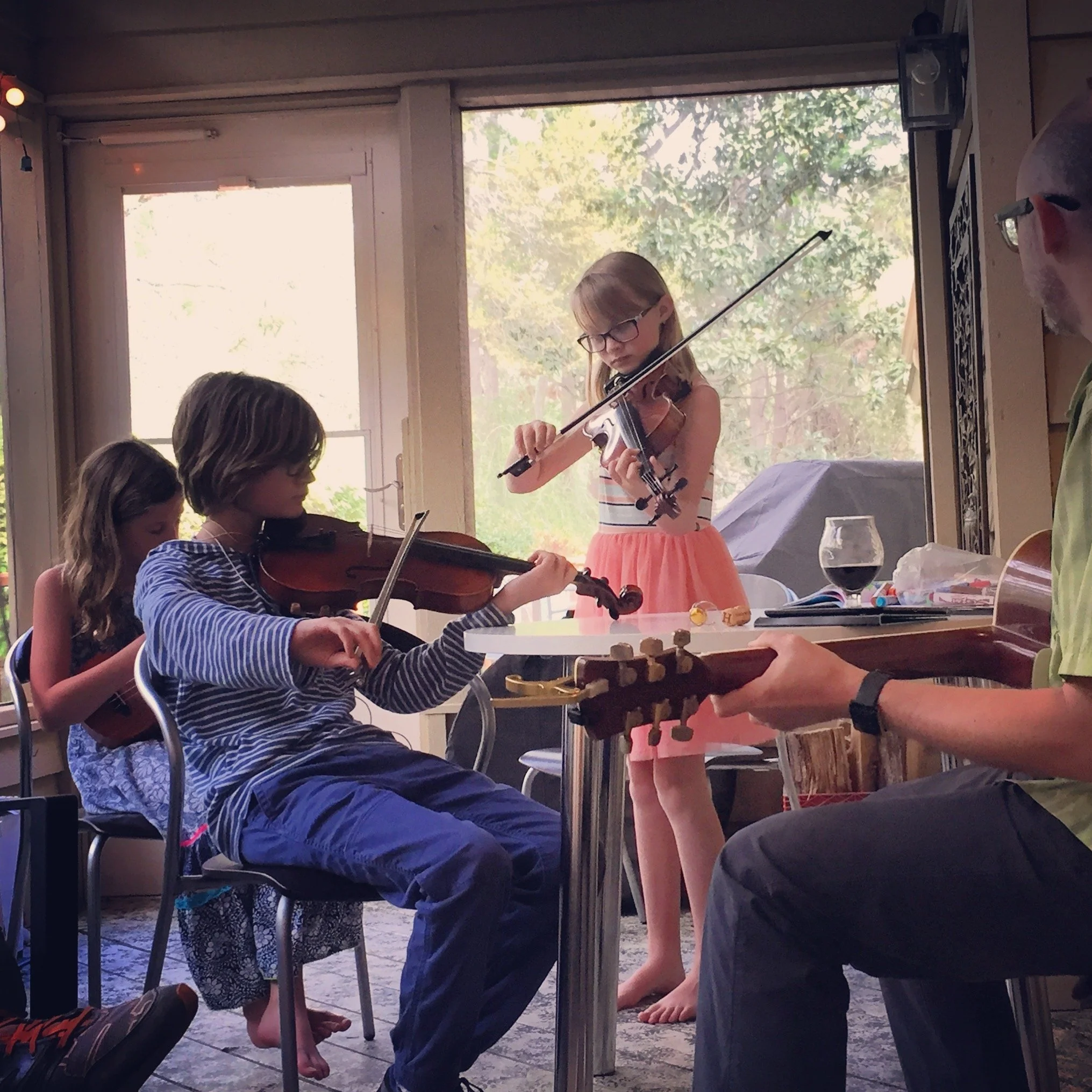
Jam session with Camille’s friends at home
Her first teacher noticed something important too—something that validated Ginger's choice of rental program from the very beginning.
Her primary instrument was viola, and when she first started lessons, that was one of the first things she said: 'Oh, usually you just get a violin with a C string that has been strung to be a viola. But this is a true viola.' She was impressed, and that also helped me realize from the beginning that we had picked the right rental program.
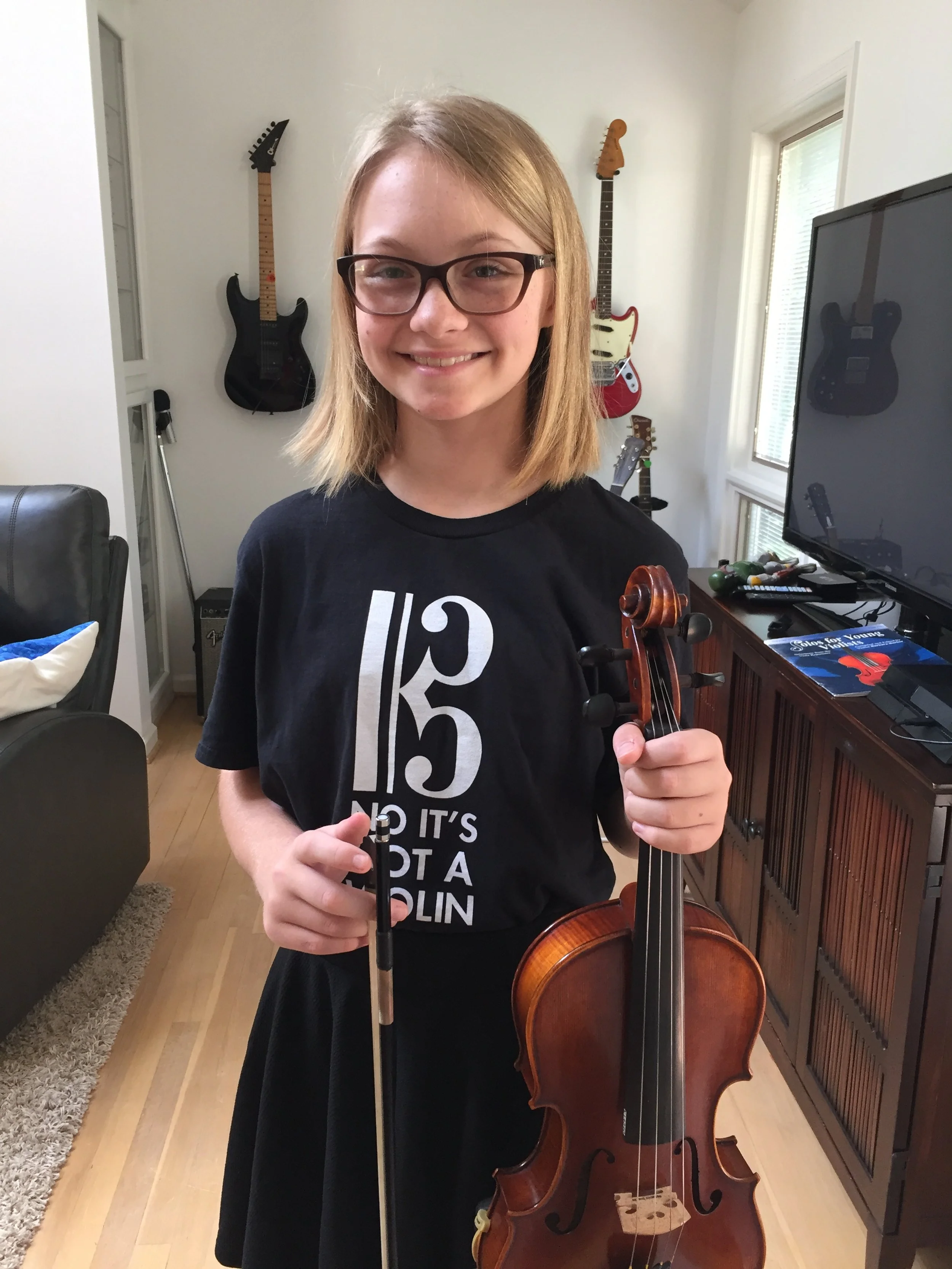
High School: Savannah Arts Academy and First Chair
In ninth grade, Camille auditioned for and joined the Savannah Arts Academy orchestra, one of the most competitive music programs in the region. For four years, she immersed herself in the rigorous rehearsal schedule, challenging repertoire, and collaborative environment that shaped her both as a musician and as a person.
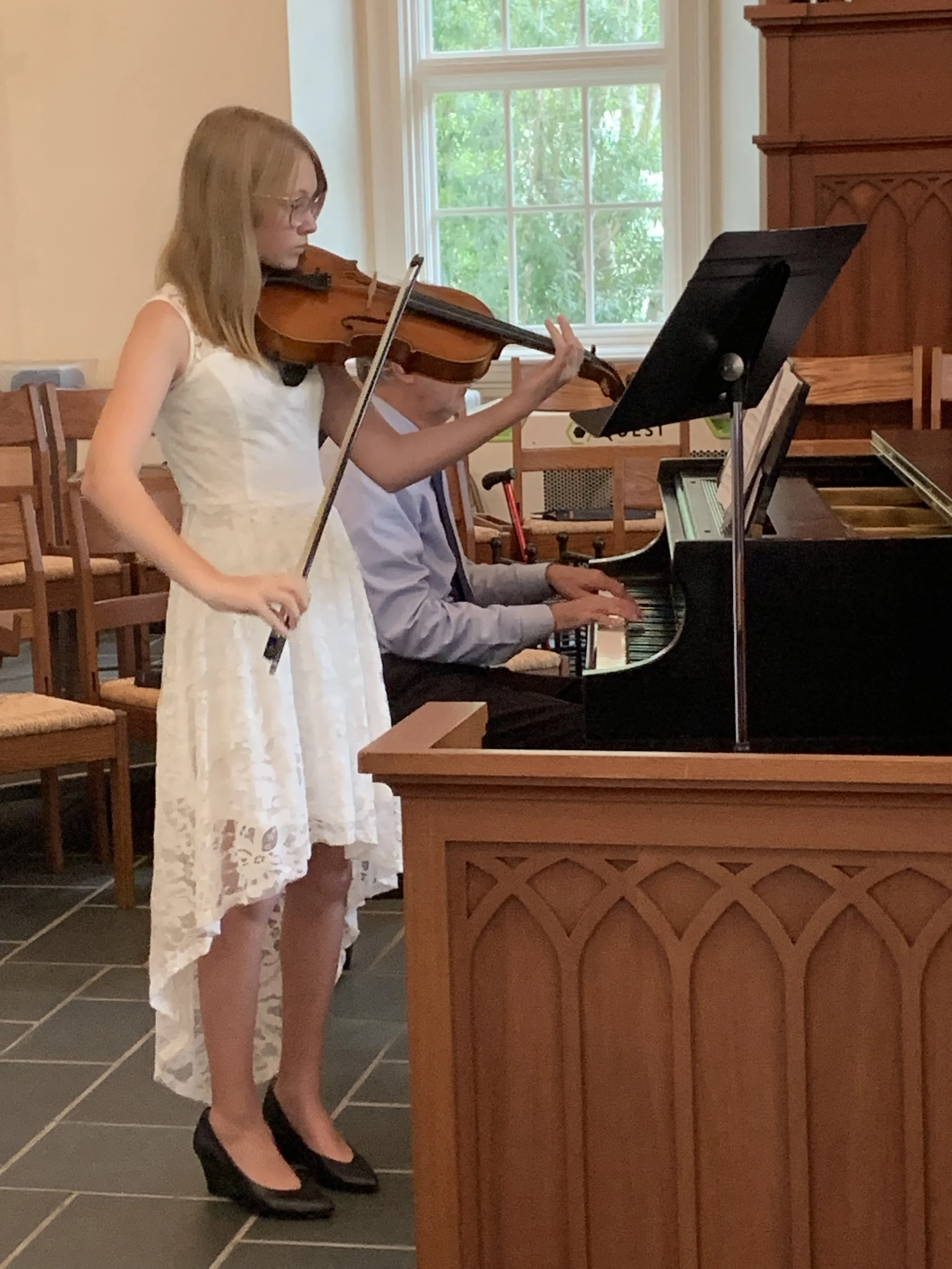
Playing at St. Peter's Episcopal Church in Savannah
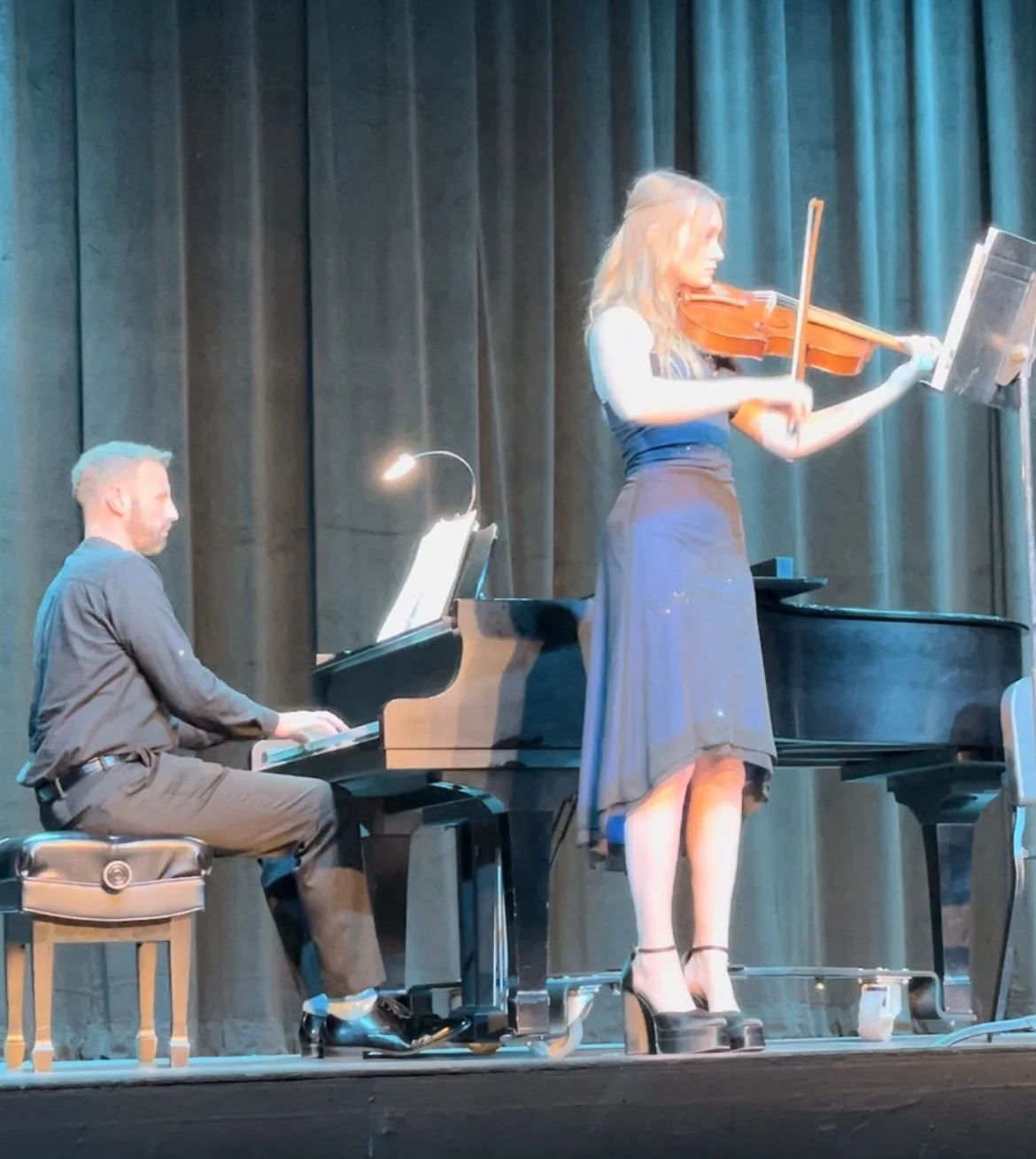
Senior solo at Savannah Arts Academy
By her senior year, she had earned the position of first chair viola—a recognition of not just her technical skill, but her leadership and commitment to the section.
Spring Break, Junior Year: Meeting Willow
During Camille's junior year, her family began thinking seriously about making a permanent instrument purchase and planned a spring break trip to the Vermont Violins location in New Hampshire. The visit was more than just a shopping trip—it was a pilgrimage to the place where her instruments had come from all these years.
It was very one-on-one, very catered to our experience. They had a record of all of the violas that I had rented over the years and stuff like that. So they knew what would work for me. They talked with me about what I play and were able to very much cater the experience to me and my playing, which was incredibly helpful. I believe we were some of the only people in there when we were doing that. So it was very one-on-one, and I got to play all the instruments and test them out and test all the different bows and stuff like that. And everyone was very well-educated and very helpful when it came to picking out the final instrument.
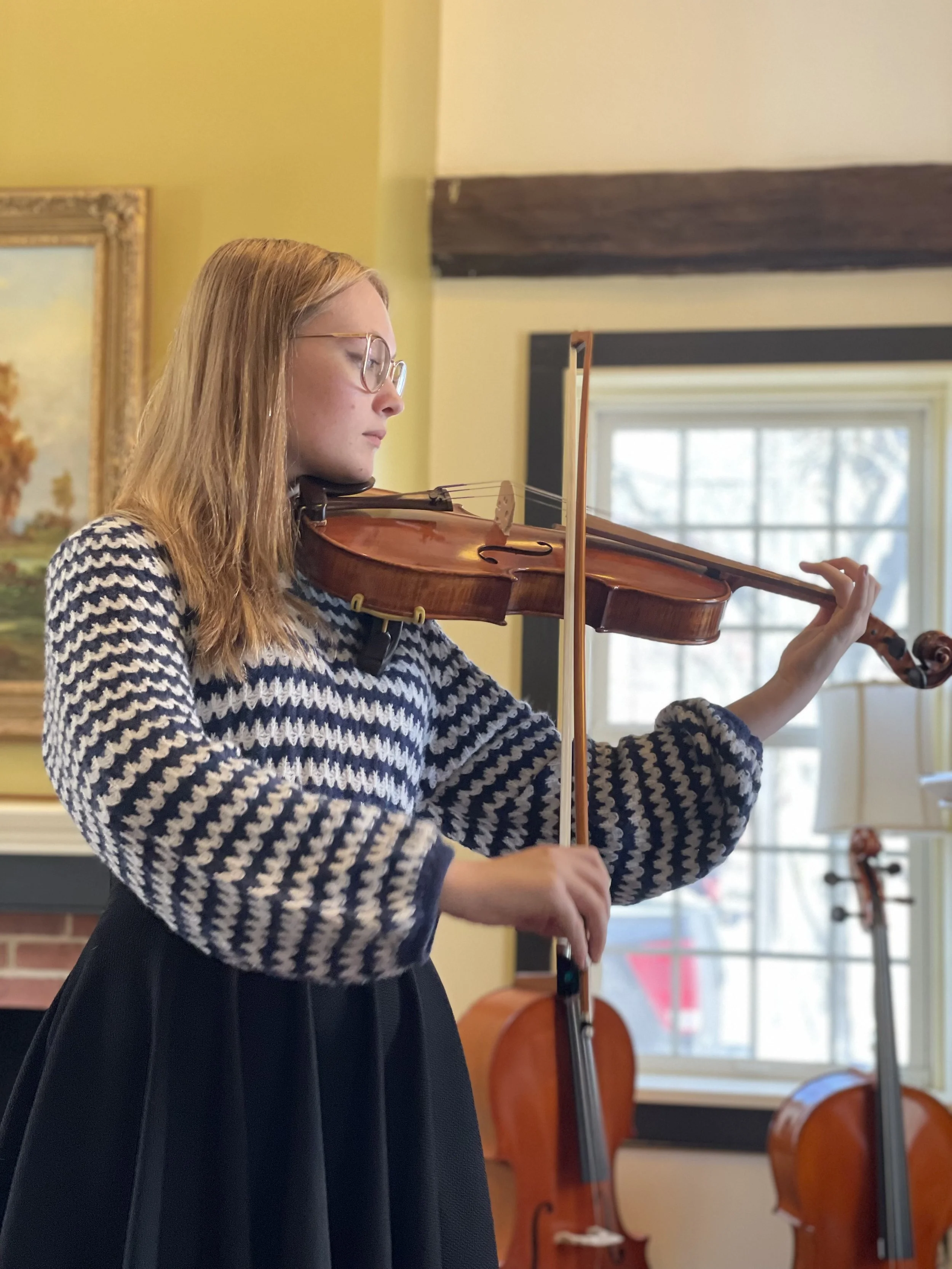
Trying instruments to purchase at Vermont Violins
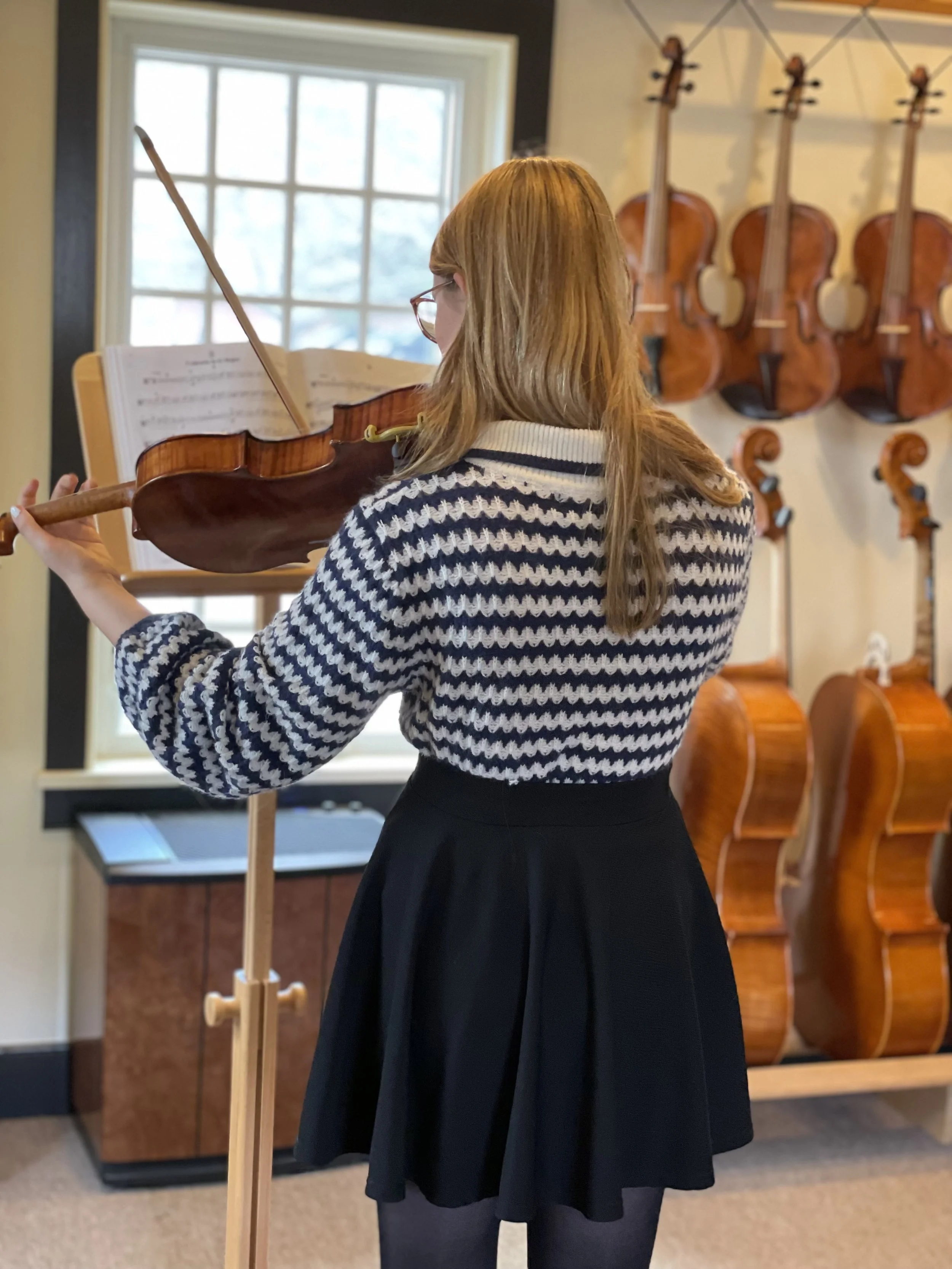
For Ginger, seeing where the instruments were made and meeting the luthiers added profound meaning to the purchase.
There's something special about buying an instrument when you've been where it's made and you've met the people who crafted that instrument. There's a special connection there that helped us make the decision to purchase the V. Richelieu instrument because we felt very connected to the source of it. That felt special.
When Camille finally found her instrument and began playing it, the difference was immediate and unmistakable.
We bought our viola at the end of my junior year of high school, so I still got to play it in orchestra throughout my senior year. I definitely noticed a difference in playing—it has a much richer sound that makes it very fun to play.
The viola earned a name: Willow. It wasn't just an instrument anymore—it was a companion, a partner, a voice.
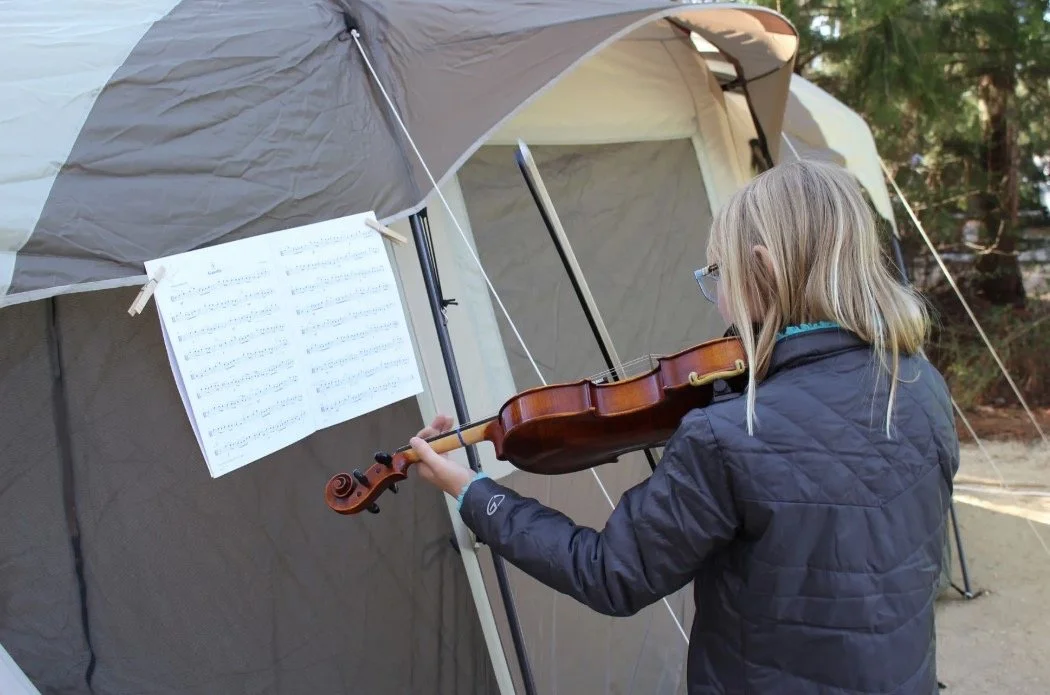
Camille playing the viola while camping
Investing in Joy: Why Quality Matters for Hobby Musicians
By the time they purchased Willow, the family knew Camille would be pursuing STEM, not music, in college. Yet they chose to invest in a high-quality instrument anyway. For some, this might seem extravagant. For Ginger, it was exactly right.
She comes from a family of hobby musicians, and music has always been very important to both her father and me, and we get a lot of joy from it. So we understand that even if it is just a hobby, it is still very important in our lives. With this being a hobby instrument, we felt like it was probably the only one that she would ever buy. So if we're only going to buy one instrument that will carry her through the rest of her life as an adult playing it as a hobby, we wanted it to be worthy of that task. Rather than just buying a good instrument, we wanted to buy a great instrument that she would be able to play for years and years and really enjoy. That was our motivation to be willing to spend a little bit more because it felt like an investment and a lifelong tool to continue playing music and to get joy out of that.
That investment has proven itself time and again.
Georgia Tech and Willow: Music as Medicine
Today, Camille is in her sophomore year at Georgia Tech, pursuing a rigorous Biology major with a minor in Korean. The academic pressure is intense. Yet Willow remains central to her wellbeing and daily rhythm.
I'm at a very rigorous school academically, and I'm obviously not pursuing music there. I'm pursuing a STEM degree. But I always try to find a way to involve music in my day. I'll take breaks in between studying to play, or if I've had a stressful exam, I can go home and play and I will feel better. I take my viola with me to college and I play a lot. I'm sure it annoys my roommates, but that's fine. Music is very much a good way to relieve stress for me. I could be having a stressful day with classes, and I can come home and I can play and I will just feel better. Music has been a way to help me get through a lot of that kind of stuff.
Her favorite pieces reflect the depth of her emotional connection to music. Merry-Go-Round of Life from Howl's Moving Castle was her senior solo. But it's Holst's Jupiter from The Planets suite that moves her most deeply.
Jupiter is my favorite musical piece of all time. I will cry every time I hear it.
The Memories That Anchor Us
Some memories become touchstones—moments that remind us why we do what we do. For Camille, one stands out from fourth grade.
I remember when I was in fourth grade, so nine or ten years old, one of my friends at the time played Happy Birthday for my dad for his 40th birthday at a local pub, and she played violin. So we played it together, and that was a special memory for me.
Ginger adds warmly: It's a core memory for her dad.
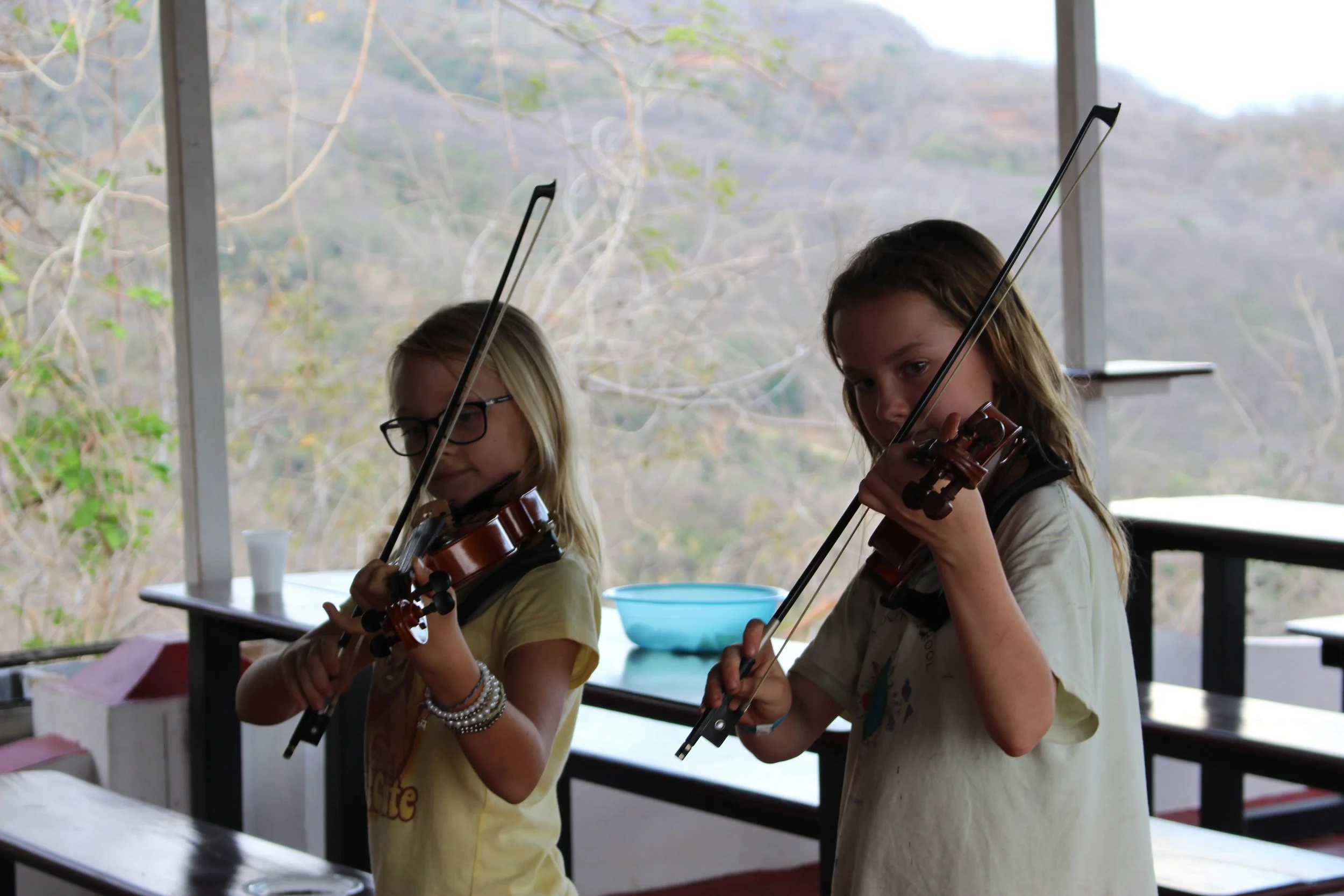
Camille playing happy birthday for her dad in Costa Rica
Another memory captures the spontaneous joy that music can bring. Ginger remembers:
We had our instrument with us, and we went out to eat at a restaurant in downtown Savannah where there was a gentleman playing piano in the restaurant. She asked if she could bring out her viola and play, and he said that would be great. So she brought up her instrument and played—I think it was Twinkle, Twinkle Little Star—and he gave her a dollar. She thought that was so cool that she got to play her instrument and get a tip from the restaurant.
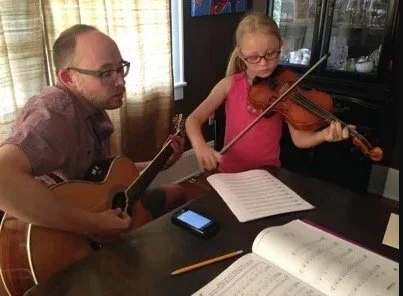
Camille’s Jam session with Dad
Beyond Performance: The Hidden Gifts of Musical Training
What strikes both mother and daughter most is how musical training has influenced areas of life that seem completely unrelated to performance.
I feel like having that kind of building block has helped me with a lot of other things in my life that I wouldn't think it would. It's helped me with math, and it's helped me with learning languages. I feel like I am much faster at learning languages now after having had to learn the language of music, and it's just impacted my life in a lot more ways than I thought that it would.
For Ginger, this was always part of the point—though perhaps not one she articulated clearly when seven-year-old Camille first expressed interest in the viola.
I think it is important in learning instruments, period. I feel like having that kind of struggle that then leads to success in music is a lesson that I hope musicians can internalize and then use throughout their life and apply to a lot of different situations. Most of what you do in life, you have to start out learning to crawl before you can walk, before you can run. Having that kind of experience in music provides lessons for life.
Advice for the Journey Ahead
Looking back on ten years of growth, both Ginger and Camille have wisdom to offer families just starting out.
I would say just to stick with it. I know so many people, a lot of my peers that were playing instruments at the time, stopped not long after that. I think it's very easy to get frustrated when you're starting out because it doesn't sound the way that you want it to. But it's important—it's like learning a language. You have to learn the alphabet before you can start writing essays, and eventually you will get there. But you have to get the building blocks down first. As much as I hated learning the scales when I was seven, it's that kind of knowledge that will help you learn to play much better in the future. So just not to get discouraged and to keep going with it.
From Ginger, for parents trying to make the right decisions:
I think you're going to have more success in the beginning if you're playing an instrument that is more forgiving and that's going to sound better. Their kid may like it better, faster if they have an instrument that is going to sound better.
And perhaps most importantly, from Camille:
I would encourage a lot more people to start with something that's not violin. I'm a big supporter of the viola, and I think we need more violas in the world. Don't be afraid of alto clef.
Looking Forward: A House Filled with Music
As Camille prepares for a twelve-week study program in New Zealand and Australia—sadly without Willow—she's already anticipating the absence. But even Down Under, music will be there. She'll have her headphones for the sixteen-hour flight, and music will fill the spaces where her viola cannot go.
I've always said that I want to live in a house that is filled with music, because I grew up in a house that was filled with music. I can't really imagine a place without it. I find friends that are musically inclined. I find romantic partners that are musically inclined, because that's just such a big part of my life that I can't imagine living in a quiet house with no instruments. Our house has guitars hanging on the walls, and we have a keyboard, and we have my viola stand, and it's very special to me. That's a big personal goal of mine, even apart from academic life—to always live in a house that has music.
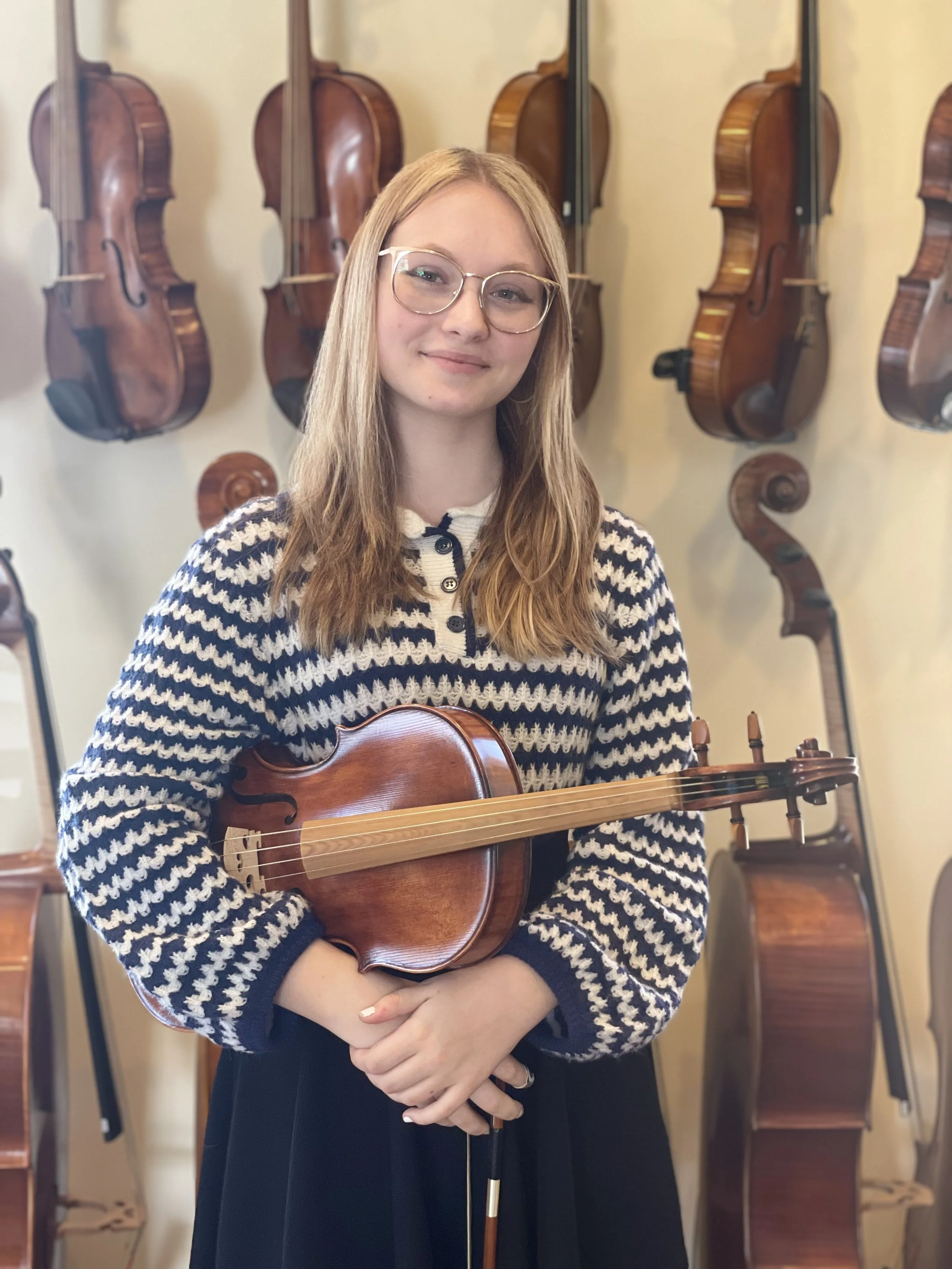
When she says music will never leave her life, you believe it. Because this isn't about being a professional musician. It's about something deeper—about identity, about joy, about the threads that connect us to ourselves and to others.
Music is not really something that I think will ever leave my life. It's something that has always been a big part of my life.
A Note on Sustainability and Values
There's one more detail about Willow that matters to Camille. As a biology major focused on conservation and sustainability, she was delighted to discover that her V. Richelieu features a Sonowood fingerboard—an ebony alternative that supports forest conservation.
That was one of the first things about my viola—the fingerboard wasn't black, it was a very light wood. I was like, 'That's cool. What's that about?' And so now I get to brag on my viola whenever someone asks.
It's a small detail, but it matters. Values matter. And when the things we love align with what we believe in, that makes them even more precious.
Closing Notes
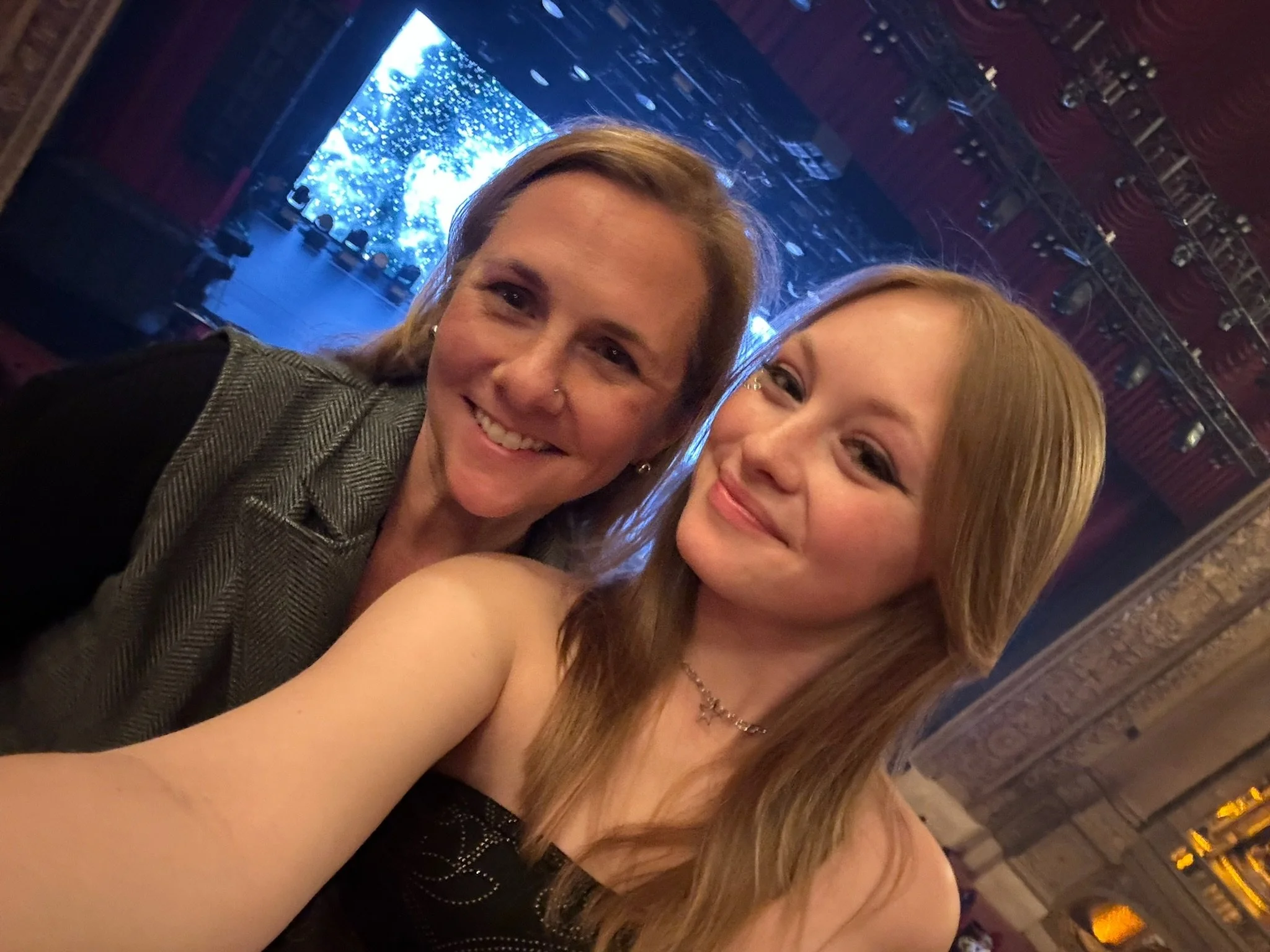
Ginger Heidel and Camille Heidel
From a seven-year-old who chose the viola because she wanted to do her own thing, to an eight-year-old auditioning for youth orchestra, to high school first chair, to a college student who plays Willow between biology exams—Camille's journey illustrates something profound.
Investment in quality—both in instruments and in the partnerships that support growth—pays dividends that extend far beyond performance. It shapes character. It provides emotional refuge. It enhances cognitive abilities. It creates lifelong joy.
And perhaps most importantly, it teaches us to stick with things even when they're hard. To build the alphabet before we write essays. To trust that eventually, we will get there.
As Ginger puts it, with the wisdom of a parent who made the right choices:
Even if it is just a hobby, it is still very important in our lives.
Camille and Ginger's journey was supported by Vermont Violins' rental program, which allows students to build equity continuously throughout their musical development. Camille's V. Richelieu viola, Willow, was handcrafted in Vermont with sustainable materials. If you're beginning your own musical journey or supporting a young musician in your life, you can learn more about our rental program and instrument selection at Vermont Violins.